⬅️ Story index · Book note: The Righteous Mind · Source: PDF (file not included in this release)
Collection scope
1 visual vignette from the Conclusion. Frank Cotham’s cartoon compresses Haidt’s final diagnosis into a family scene: political disagreement becomes proof that only one side cares about the country, and a conflict over judgment becomes a conflict between righteousness and moral emptiness.
Evidence boundary
The cartoon is rhetorical illustration, not evidence that politics causes marital separation or that opposing political claims are equally true, humane, or consequential. Haidt is the immediate source; the image is credited in the book to Frank Cotham and The New Yorker collection.
A Child Hears That Political Disagreement Is Why His Parents Are Separating
Conclusion · Political cartoon used as a visual vignette · Canonical theme: Conflict, Anger & Reconciliation
A child stands between his parents in their living room. His mother is turned away on the sofa; his father sits opposite her. The father explains the separation by saying that he wants what is best for the country and the child’s mother does not.
The line refuses to represent the mother’s position as another judgment about what would help the country. It converts disagreement into a difference in moral purpose: one parent seeks the good; the other apparently does not care. Haidt places Frank Cotham’s cartoon at the end of his account of groupish righteousness, after arguing that intuitive creatures use strategic reasoning to defend rival moral matrices.
The joke is also a warning. Once a political identity monopolizes goodness, an opponent’s reasons no longer need to be heard. Public disagreement can then colonize intimate relationships, and compromise begins to look like cooperation with indifference or evil.
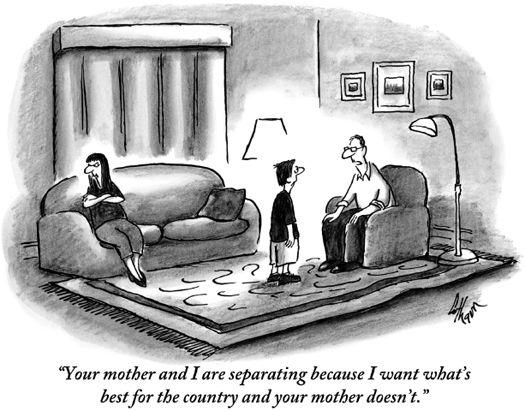
Figure 13.1 — Frank Cotham’s cartoon of Manichaean political disagreement. PDF p. 355 (file not included in this release)
What it argues
Conflict becomes harder to repair when each side treats its own preferred remedy as proof of care and the other’s remedy as proof that the other does not care at all.
Use it for: Manichaeism, motive attribution, political polarization, family conflict, moralization, reconciliation.
Interpretation boundary
The cartoon does not show that every dispute is a misunderstanding, that both sides are equally responsible, or that a true and false claim should be split down the middle. It targets the inference from disagreement to moral emptiness. Facts, conduct, rights, power, and responsibility still require separate judgment.
Source page — Conclusion
Figure 13.1 and final advice, PDF p. 355 (file not included in this release)
The Righteous Mind_ Why Good People Are Di - Haidt, Jonathan (Annotated).pdf (file not included in this release)
Source route
- Full conclusion and figure audit → *The Righteous Mind*, Conclusion
- Permanent distinction → Moral Pluralism Is Not Moral Relativism
- Theme-first library → 40 Stories