Zibaldone 2024–2025 journal
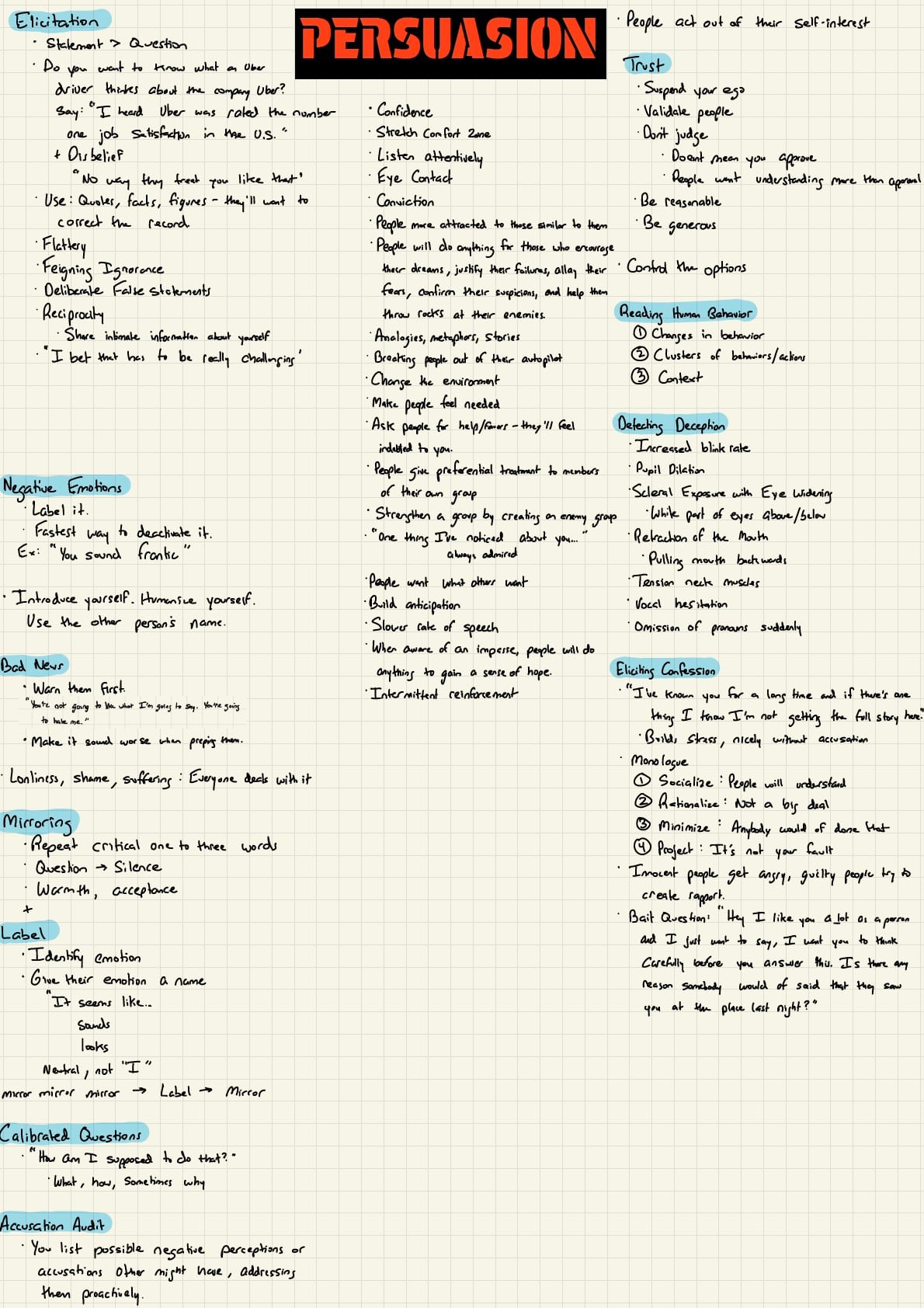
Journal connection: Persuasion, framing, rhetoric, and high-stakes communication material.
Source boundary: These are captured journal materials; the integration does not independently verify every clipped claim, quotation, or figure.
PDF++ pages: p. 149 (file not included in this release) · p. 187 (file not included in this release) · p. 273 (file not included in this release) · p. 288 (file not included in this release) · p. 293 (file not included in this release)
Embedded preview:
Zibaldone 2024-2025.pdf (file not included in this release)
Open the complete Zibaldone page index
Haidt, Chapter 2 — establish access before offering the reason
In moral and political conflict, refuting a stated argument may remove only one defense of an earlier judgment. Haidt therefore recommends addressing the “elephant”: begin with respect, listen well, demonstrate that the other person’s perspective has been understood, and then offer a reason, analogy, or fact capable of changing what the situation looks like. He also notes that genuine perspective-taking can open the persuader’s own mind.
This is not a license to replace evidence with affect. Warmth creates access; the reason still needs to be accurate, relevant, and open to reciprocal testing. Haidt’s six-link model is most useful as an ethical sequence: relational safety → salient evidence or perspective → possible intuitive revision → explicit reconsideration. How to win an argument, PDF pp. 68–69 (file not included in this release) · Chapter 2 source audit · Permanent model note
Haidt’s Conclusion — commonality before morality
Haidt ends with a concrete sequence for talking across moral matrices: do not open with the identity-laden dispute; find genuine commonality or establish some trust; introduce the issue with deserved praise or sincere interest; listen for the value and feared harm; then test reasons and evidence. The method aims to make revision psychologically possible, not to make agreement compulsory.
Scope conditions: fabricated praise is manipulation; trust is not proof; understanding is not endorsement; and no one owes friendly exposure to coercion, abuse, danger, or persistent bad faith. Some conflicts require boundaries, enforcement, or adjudication rather than persuasion. Where dialogue is safe and useful, the sequence is: commonality → trust → interest → accurate moral translation → evidence and reciprocal judgment. Closing protocol, PDF p. 355 (file not included in this release) · Conclusion source audit