
DESCRIPTION
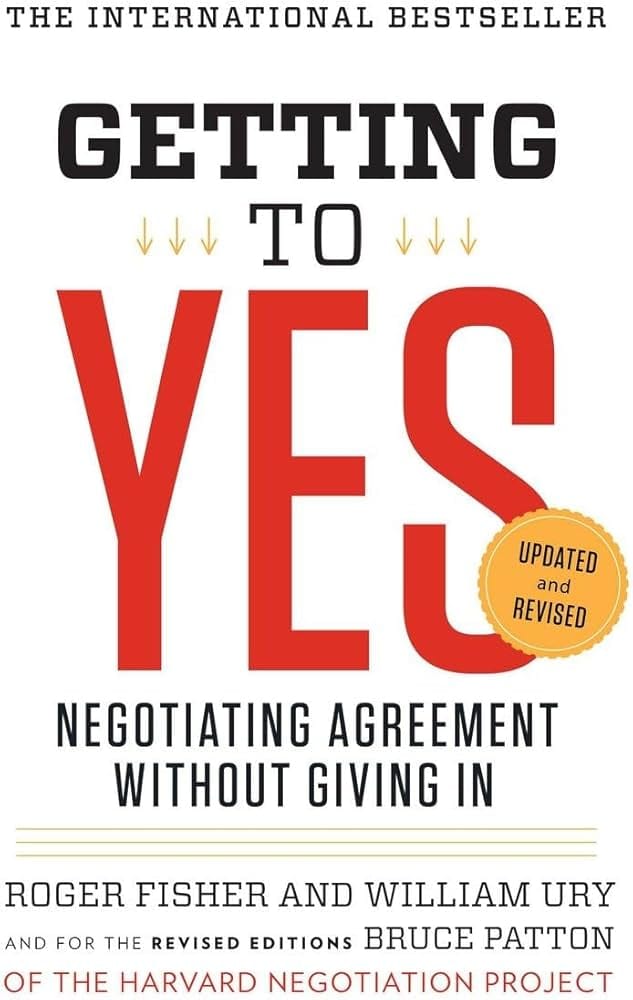
Describes a method of negotiation that isolates problems, focuses on interests, creates new options, and uses objective criteria to help two parties reach an agreement.
My Summary
Main Ideas, Takeaways & Similarities
Questions
I. What is the problem?
A. How is this problem formulated?
B. Why is this problem important?
C. What is the history of this problem?
D. Which prominent personalities have been interested in this problem?
II. What solutions to the problem are there?
A. What are the conclusions reached?
B. By what argument(s) is the conclusion reached?
C. What facts or assumptions serve as premises?
D. When a prominent personality offers a solution, does he also argue for or against other prominent personalities? Does he raise objections to alternative solutions? Does he consider objections to his own solutions?
III. Evaluation
A. What are the advantages and disadvantages of the alternative formulations to the problem?
B. Has the importance or history of the problem ever been misrepresented?
C. Are the solutions logically related to the premises?
D. Are the facts true? Are the assumptions acceptable? Are the objections answerable?
AI Summary
Highlights
“Getting to Yes: Negotiating Agreement Without Giving In” is a book written by Roger Fisher and William Ury, first published in 1981. The book presents a principled and effective approach to negotiation that focuses on finding mutually beneficial solutions. Here is a comprehensive summary of the book in bullet points:
- The book introduces the concept of “principled negotiation,” a method for reaching agreements that are fair, efficient, and mutually beneficial.
- Fisher and Ury emphasize the importance of separating people from the problem and focusing on the underlying interests and needs of both parties.
- They encourage negotiators to move away from traditional, adversarial approaches and instead work collaboratively to find solutions.
- The authors introduce four key principles of principled negotiation:
- Separate the people from the problem.
- Focus on interests, not positions.
- Invent options for mutual gain.
- Insist on using objective criteria.
- The book provides practical guidance on how to apply these principles effectively in negotiations.
- Fisher and Ury emphasize the significance of effective communication and active listening to understand the concerns and interests of the other party.
- They argue that by addressing underlying interests rather than fixed positions, negotiators can create value and find solutions that meet both parties’ needs.
- The book introduces the concept of “BATNA” (Best Alternative to a Negotiated Agreement) and explains how it can be a powerful tool in negotiation.
- Fisher and Ury discuss the importance of generating creative options for mutual gain and explore techniques for brainstorming and problem-solving.
- They provide examples and case studies to illustrate the application of principled negotiation in various contexts, including business, family, and international diplomacy.
- The authors stress the value of objective criteria and standards in evaluating proposed solutions and making decisions.
- They address common negotiation pitfalls and challenges, such as positional bargaining, ego, and emotions.
- The book offers practical advice on handling difficult negotiations, including strategies for dealing with tough or unethical negotiators.
- Fisher and Ury provide guidance on how to overcome common obstacles and create a collaborative and problem-solving atmosphere in negotiations.
- They conclude by highlighting the long-term benefits of principled negotiation and the potential for building positive relationships and agreements based on fairness and mutual gain.
“Getting to Yes” is a seminal book on negotiation that offers a principled and effective approach to reaching agreements. Roger Fisher and William Ury’s methods emphasize collaboration, problem-solving, and finding mutually beneficial solutions. The book provides valuable insights and practical techniques that can be applied in a wide range of negotiation scenarios, promoting more successful and satisfying outcomes for all parties involved.