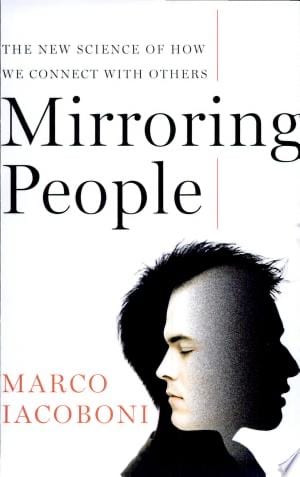
DESCRIPTION
A leading neuroscientist explains the groundbreaking research into mirror neurons and gets at the very heart of what it means to be human—the creation of a bridge between self and others that is fundamental to the development of culture and society.
My Summary
Main Ideas, Takeaways & Similarities
Questions
I. What is the problem?
A. How is this problem formulated?
B. Why is this problem important?
C. What is the history of this problem?
D. Which prominent personalities have been interested in this problem?
II. What solutions to the problem are there?
A. What are the conclusions reached?
B. By what argument(s) is the conclusion reached?
C. What facts or assumptions serve as premises?
D. When a prominent personality offers a solution, does he also argue for or against other prominent personalities? Does he raise objections to alternative solutions? Does he consider objections to his own solutions?
III. Evaluation
A. What are the advantages and disadvantages of the alternative formulations to the problem?
B. Has the importance or history of the problem ever been misrepresented?
C. Are the solutions logically related to the premises?
D. Are the facts true? Are the assumptions acceptable? Are the objections answerable?
AI Summary
Highlights
“Mirroring People: The New Science of How We Connect with Others” is a book written by Marco Iacoboni, published in 2008. The book explores the science of mirror neurons and how they play a crucial role in human social interaction and empathy. Here is a comprehensive summary of the book in bullet points:
- The book introduces the concept of mirror neurons, a type of brain cell that is believed to play a fundamental role in human social interaction, empathy, and understanding of others.
- Marco Iacoboni discusses the discovery of mirror neurons and the groundbreaking research that has shed light on their functions.
- He explains how mirror neurons work by firing both when an individual performs a specific action and when they observe someone else performing the same action.
- The book explores the implications of mirror neurons for understanding human behavior, communication, and the development of empathy.
- Iacoboni discusses how mirror neurons are thought to underlie our ability to imitate, learn from others, and connect emotionally with people.
- He provides examples of how mirror neurons can explain various aspects of human behavior, including imitation, learning, and the experience of emotions.
- The book discusses the role of mirror neurons in understanding and responding to the emotions and intentions of others, contributing to our capacity for empathy.
- Iacoboni explores the potential applications of mirror neuron research in fields such as psychology, neuroscience, and education.
- He discusses how mirror neurons may provide insights into disorders and conditions related to social cognition, such as autism and schizophrenia.
- The book addresses the ethical and philosophical questions raised by the discovery of mirror neurons, including their implications for free will and moral responsibility.
- Iacoboni reflects on the broader implications of mirror neuron research for our understanding of what it means to be human and our capacity for connection and empathy.
“Mirroring People: The New Science of How We Connect with Others” delves into the fascinating world of mirror neurons and their profound impact on human social interaction and empathy. Marco Iacoboni’s book provides insights into the science behind mirror neurons, their functions, and their potential implications for fields ranging from psychology to philosophy. It offers a deeper understanding of how humans connect with one another and the role of mirror neurons in shaping our social and emotional lives.