Vault cross-reference
The Jewish pogroms in this book (Basel, Speyer, Strasbourg, Toulon, the “Jewish plot” rumour) are the clearest historical case study for the three-step antisemitism mechanism mapped in Antisemitism: a fresh collective designation, projection of the era’s most loathsome quality, then licensing by the era’s highest authority. Einat Wilf uses the Black Death specifically as one of the four historical peaks where societal crisis activated scapegoating — the others being the 11th-c. Church schism, Weimar’s collapse, and the post-war USSR. Read alongside Zionism and A Distant Mirror - Barbara W Tuchman (which sets the same violence inside the 14th century’s wider structural collapse).
DESCRIPTION
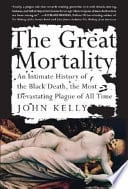
A compelling and harrowing history of the Black Death epidemic that swept through Europe in the mid–14th century killing 25 million people. It was one of the most devastating human disasters in history. “The bodies were sparsely covered that the dogs dragged them forth and devoured them . And believing it to be the end of the world, no one wept for the dead, for all expected to die.” Agnolo di Turo, Siena, 1348 In just over 1000 days from 1347 to 1351 the ‘Black Death’ swept across medieval Europe killing 30% of it’s population. It was a catastrophe that touched the lives of every individual on the continent. The deadly Y. Pestis virus entered Europe by Genoese galley at Messina, Sicily in October 1347. By the spring of 1348 it was devastating the cities of central Italy, by June 1348 it had swept in to France and Spain, and by August it had reached England. One graphic testimony can be found at St Mary’s, Ashwell, Hertfordshire, where an anonymous hand carved a harrowing inscription for 1349: ‘Wretched, terrible, destructive year, the remnants of the people alone remain.’ According to the Foster scale, a kind of Richter scale of human disaster, the plague of 1347–51 is the second worst catastrophe in recorded history. Only World War II produced more death, physical damage, and emotional suffering. It is also the closest thing that Defence Analysts compare a thermonuclear war to – in geographical extent, abruptness and casualties. In The Great Mortality John Kelly retraces the journey of the Black Death using original source material – diary fragments, letters, manuscripts – as it swept across Europe. It is harrowing portrait of a continent gripped by an epidemic, but also a very personal story narrated by the individuals whose lives were touched by it.
The Great Mortality - John Kelly.pdf (file not included in this release)
The Great Mortality - John Kelly PDF Extract
Introduction
(p.7 (file not included in this release))
remains the greatest natural disaster in human history.
(p.7 (file not included in this release))
In Europe, where the most complete figures are available, in many places the plague claimed a third of the population; in others, half the population; and in a few regions, 60 percent.
(p.8 (file not included in this release))
It was corpses packed like “lasagna” in municipal plague pits, collection carts winding through early-morning streets to pick up the previous day’s dead, husbands abandoning dying wives and parents abandoning dying children—for fear of contagion—and knots of people crouched over latrines and sewers inhaling the noxious fumes in hopes of inoculating themselves against the plague.
(p.8 (file not included in this release))
It originated in inner Asia, somewhere in the still-remote region between Mongolia and Kirgizia, and might well have remained there, had not the Mongols unified much of Eurasia in the thirteenth century, thereby facilitating the growth of three activities that continue to play an important role in the spread of infectious disease: trade, travel, and larger and more efficient communications.
(p.9 (file not included in this release))
In a century when nothing moved faster than the fastest horse, the Black Death had circumnavigated Europe in a little less than four years.>
(p.9 (file not included in this release))
The Great Mortality occasioned the most violent outburst of antiSemitism in the Middle Ages, a period already marked by violent antiSemitic outbursts.
Chapter One: Oimmeddam
(p.13 (file not included in this release))
To the north, through a belt of dense forest, lay the most magnificent land route in the medieval world, the Eurasian steppe, a great green ribbon of rolling prairie, swaying high grass, and big sky that could deliver a traveler from the Crimea to China in eight to twelve months. To the west lay the teeming port of Constantinople, wealthiest city in Christendom, and beyond Constantinople, the slave markets of the Levant, where big-boned, blond Ukrainians fetched a handsome price at auction. Farther west lay Europe, where the tangy spices of Ceylon and Java and the sparkling diamonds of Golconda were in great demand. And between these great poles of the medieval world lay Caffa, with its “worthy port” and phalanx of mighty Russian rivers: the Volga and Don immediately to the east, the Dnieper to the west.
(p.18 (file not included in this release))
The Genoese, who imagined that God was born in Genoa, greeted the plague’s arrival with prayers of thanksgiving. The Almighty had dispatched a heavenly host of warrior angels to slay the infidel Mongols with golden arrows, they told one another.
(p.20 (file not included in this release))
Worldwide, the disease has killed an estimated 200 million people, and no outbreak of plague has claimed as many victims or caused as much anguish and sorrow as the Black Death.
(p.20 (file not included in this release))
According to the commission’s Disaster and Recovery, a Cold War–era study of thermonuclear conflict, of all recorded human events, the Black Death comes closest to mimicking “nuclear war in its geographical extent, abruptness of onset and scale of casualties.”
(p.20 (file not included in this release))
How many people perished in the Black Death is unknown; for Europe, the most widely accepted mortality figure is 33 percent.* In raw numbers that means that between 1347, when the plague arrived in Sicily, and 1352, when it appeared in the plains in front of Moscow, the continent lost twenty-five million of its seventy-five million inhabitants.
(p.20 (file not included in this release))
The Black Death was particularly cruel to children and to women, who died in greater numbers than men, probably because they spent more time indoors, where the risk of infection was greater, and cruelest of all to pregnant women, who invariably gave birth before dying.
(p.21 (file not included in this release))
In the Islamic Middle East and North Africa, mortality rates also were in the one-third range.
(p.21 (file not included in this release))
Today a demographic disaster on the scale of the Black Death would claim 1.9 billion lives.
(p.21 (file not included in this release))
Plague is a disease of rodents.
(p.21 (file not included in this release))
Tartar officials, and armies into proximity with some of the most virulent, and heretofore isolated, plague foci in the world.
(p.22 (file not included in this release))
That said, tree ring data indicates that the early fourteenth century was one of the most severe periods of environmental stress in the last two thousand years—perhaps due to unusual seismic activity in the world’s oceans. And modern experience shows that ecological upheaval in the form of droughts, floods, and earthquakes can play a role in igniting plague, usually because such events dislodge remote wild rodent communities, the natural home of Y. pestis, from their habitats and drive them toward human settlements in search of food and shelter.
(p.22 (file not included in this release))
Social and demographic conditions are also risk factors in plague.
(p.23 (file not included in this release))
The role of malnutrition in human plague is controversial, though perhaps unjustifiably so.
(p.23 (file not included in this release))
War creates human remains and refuse, which attract rats; filthy bodies, which attract fleas; and stresses, which can lower immune system function. Marching soldiers and cavalry also help to make a pestilence more mobile.
(p.24 (file not included in this release))
The years between 1000 and 1250 were a period of great economic and demographic growth in the medieval West, but when the economy began to stall out after 1250, Europe found itself trapped in what historian David Herlihy has called “Malthusian deadlock.”
(p.24 (file not included in this release))
In the fourteenth century war was almost as much a constant as hunger.
(p.25 (file not included in this release))
By the early fourteenth century so much filth had collected inside urban Europe that French and Italian cities were naming streets after human waste.
(p.25 (file not included in this release))
The medieval countryside, where 90 percent of the population lived, was an even more dangerous place than the medieval city. Thinly walled, peasant homes were highly permeable, and the rat-to-person ratio tended to be very high in rural areas.
(p.26 (file not included in this release))
Galen, believed that the pestilence arose from miasmas—dense clouds of infected air.
(p.26 (file not included in this release))
Plague is among the slowest moving of wandering sicknesses.
(p.27 (file not included in this release))
The principal vector in the disease is not the rodent, the animal most often associated with it, but the rodent flea.
(p.27 (file not included in this release))
ometimes humans are infected directly by one of the many flea species that prey on wild rodents, such as squirrels, prairie dogs, and marmots; however, most often the agent of infection in human plague is the more familiar black rat flea, Xenopsylla cheopis.
(p.27 (file not included in this release))
plague kills off the local domestic rat community, the flea’s only alternatives are starvation or Homo sapiens.
(p.27 (file not included in this release))
In an infected flea, plague bacilli build up in the foregut, producing a blockage; this enhances the insect’s ability to spread infection in two ways. First, because no nutrients are reaching the stomach, X. cheopis, chronically hungry, bites constantly; and second, as undigested blood builds up in the foregut, the flea becomes a living hypodermic needle.
(p.28 (file not included in this release))
Three forms of plague prey on humans. Bubonic plague, the most common form, is transmitted by a flea bite and has a two- to six-day incubation period
(p.29 (file not included in this release))
Bubonic plague is the most survivable of the three forms of the disease. Untreated, it has a mortality rate of about 60 percent.
(p.29 (file not included in this release))
Pneumonic is the second type of plague, and—uniquely—it can spread directly from person to person.
(p.30 (file not included in this release))
The “coughing plague” is extremely lethal. If it goes untreated, the mortality rate in its victims is between 95 and 100 percent.
(p.30 (file not included in this release))
No one survives untreated septicemic plague, the third form of the disease.
(p.31 (file not included in this release))
The generation who lived through the medieval pestilence called it la moria grandissima, la mortalega grande, très grande mortalité, grosze Pestilentz, peligro grande, and huge mortalyte: names that translate roughly as the “Great Mortality,” or, more colloquially, the “Big Death.”
(p.34 (file not included in this release))
In January 1349 Basel burned its Jews on an island in the Rhine, while hygiene-conscious Speyer, fearing pollution, put its dead Jews in wine barrels and rolled them into the river. In February, as a prophylactic measure, Strasbourg marched its Jews to a local cemetery and burned them.
(p.34 (file not included in this release))
In the three and a half years it took Y. pestis to complete its circle of death, plague touched the life of every individual European: killing a third of them, leaving the other two-thirds grieving and weeping.
Chapter Two: “They are Monsters, Not Men”
(p.36 (file not included in this release))
Upon leaving Caffa, a traveler could expect to spend eight to twelve months on the back of a Mongol pony or a jostling cart
(p.37 (file not included in this release))
The French historian René Grousset has called the “discovery of Asia … as important to men of the Middle Ages as the discovery of America was to men of the Renaissance.” But it might be more accurate to describe the medieval discovery of Asia as a rediscovery. During Antiquity, news from the Orient would occasionally drift westward along the Silk Road, which wound through the necklace of desert between China and Arabia, or across the snowy passes of the Pamir Mountains in Central Asia, where representatives of Rome and China would meet to exchange goods. But from the seventh century onward, Europe became isolated on the western edge of Eurasia, a prisoner of its own disorder and collapse. To the extent that the reawakening West of the eleventh and twelfth centuries had a knowledge of the East, it was of the Middle East, and, more particularly, a thin strip of the coastal Middle East where Genoese and Venetian merchants were allowed to buy Asian goods from Arab middlemen at exorbitant markups.
(p.37 (file not included in this release))
The first Europeans to travel to Asia were clerics like John de Marignolli, a papal emissary
(p.38 (file not included in this release))
The second wave of European visitors were merchants, most Genoese or Venetian, enticed to the East by the opportunity to buy Asian goods at the source.
(p.39 (file not included in this release))
Prized for its fur, the limpid-eyed, squirrellike tarabagan was—and still is —greatly feared on the steppe for its powers of contagion.
(p.40 (file not included in this release))
ccording to Wendy Orent, who has worked closely with many Russian scientists, whenever the Soviet Union drew up plans for a new plague weapon, Major General Nikolai Urakov, a leader of the USSR’s biological weapons program, would shout to his staff, “I only want one strain”—marmot plague.
(p.40 (file not included in this release))
Y. pestis seems to have originated on the steppe of Central Asia. Microbiologist Robert Brubaker thinks the big bang in Y. pestis’s life may have been the end of the last Ice Age.
(p.40 (file not included in this release))
Y. pestis is only fifteen hundred to twenty thousand years old, young enough to fit Dr. Brubaker’s scenario, and its ragged genetic structure certainly suggests an agent slapped together in a hurry to meet an evolutionary emergency.
(p.41 (file not included in this release))
Like HIV, Y. pestis is extremely adept at confusing the human immune system. Often by the time the body can mount a defense, the pathogen has become uncontainable.
(p.41 (file not included in this release))
Y. pestis can also kill nearly anything put in front of it, including humans, rats, tarabagans, gerbils, squirrels, prairie dogs, camels, chickens, pigs, dogs, cats, and, according to one chronicler, lions.
(p.41 (file not included in this release))
Like other major pathogens, Y. pestis has become a successful killer by learning how to be an adaptable killer. It can be transmitted by thirty-one different flea species, including X. cheopis, the most efficient vector in human plague, and Pulex irritans, the most controversial. Some researchers believe the bite of the ubiquitous P. irritans, the human—and pig—flea, contains too few bacilli to transmit plague effectively; but other investigators* suspect that the human flea plays an important, if unappreciated, role in the spread of the disease. The pro–P. irritans school is supported by the work of General Shiro Ishii, commander of the Japanese army’s biological warfare unit during World War II.
(p.43 (file not included in this release))
In the case of the Black Death, the first group of outsiders to be infected may have been Mongol herdsmen looking for new pastureland.
(p.46 (file not included in this release))
Kutluk and Magnu-Kelka were almost certainly not the first victims of the Black Death, but their remote little lakeside cottage is where the most terrible natural disaster in history begins to enter the human record.
(p.47 (file not included in this release))
If the Third Pandemic is where the story of man and plague ends—at least for now—then the sixth-century Plague of Justinian is where it begins. There are several references to what sounds like plague in the Bible, but Y. pestis did not officially enter human history until a.d. 542, when it strode off a ship in the Egyptian port of Pelusium.
(p.47 (file not included in this release))
Like the Black Death, the Plague of Justinian also occurred during a period of extreme ecological change. A recent study of two thousand years of tree ring data reveals that four years in the last two millennia were periods of extraordinarily severe weather
(p.48 (file not included in this release))
other was 540, two years before Y. pestis arrived in Pelusium
(p.48 (file not included in this release))
The Plague of Justinian marked an important turning point in Europe’s relationship with infectious disease. The centuries preceding the First Pandemic were a period of chronic, devastating epidemics. In the second and third centuries, smallpox and measles outbreaks may have killed a quarter to a third of the population in parts of the Roman Empire. The centuries after Justinian were, if not disease-free, then close to it. During the early Middle Ages, all forms of infectious illness became uncommon and plague (as far as is known), nonexistent. For this disease-free interim, the collapse of civilization deserves some credit. A disease is more than just a
(p.49 (file not included in this release))
pathogen plus a transportation system. To ignite an epidemic, a friendly environment is also necessary, and after Rome fell, the environment in Europe, particularly northwest Europe, became increasingly unfriendly to epidemic disease. In the early Middle Ages, the population plunged precipitously, shrinking the pool of potential host-victims. In the second and third centuries, Roman Europe had 50 to 70 million people; by 700, Europe had 25 to 26 million. The disappearance of urban life removed two other necessities: concentrations of people, and filthy, rodent-infested streets. At its height, the city of Rome had a population variously estimated at half a million to ten million; by 800, no city in Europe contained more than twenty thousand residents. “In the middle of the debris of great cities,” wrote one Dark Ages scribe, “only scattered groups of wretched peoples survive.”
(p.49 (file not included in this release))
The resurgent forest provided a further barrier against infectious illness. By a.d. 800, dense woodland had reclaimed 80 percent of a depopulated Europe’s surface, severely restricting trade and travel and providing a firewall, which helped to keep local epidemics local. The international situation added a final layer of insulation. By the ninth century, the principal east-west trade routes were all in unfriendly Muslim hands.
(p.49 (file not included in this release))
Sometime between 750 and 800, Europe entered the Little Optimum,* a period of global warming.
(p.50 (file not included in this release))
A burst of technological innovation added to agricultural productivity. Someone figured out that one easy (and cheap) way to get a horse to pull more was to redistribute weight away from its windpipe, so when it moved forward it wouldn’t choke. Thus was born the horse collar, which increased horsepower by a factor of four. Another simple innovation, the horseshoe, increased it even more, by improving the horse’s endurance. The new carruca plow, with its large, sharp rectangular blade, also represented an important improvement, particularly in northern Europe, where the soil was heavier and harder to turn. However, the true technological marvels of the age were the watermill and the windmill; for the first time in human history, a society had harnessed a natural source of power.
(p.50 (file not included in this release))
As agricultural productivity improved, living standards rose, producing a baby boom of historic proportions. The demographic surge of the Central Middle Ages was as dramatic as the decline of five hundred years earlier. Between 1000 and 1250 the population doubled, tripled, and may even have quadrupled
(p.52 (file not included in this release))
Early in the thirteenth century the Venetians, who described themselves as “rulers of half and a quarter of the Roman Empire,” devised an ingenious bit of mischief to circumvent the greedy Arabs and deal directly with the East. Venetian authorities offered a group of French Crusaders free passage to the Holy Land, then rerouted the Crusaders east to capture Constantinople
(p.54 (file not included in this release))
In Germany rumors that the Tartars were Gog and Magog, the two lost tribes of Israel, ignited pogroms against the Jews.
Chapter Three: The Day Before the Day of the Dead
(p.58 (file not included in this release))
Between 1250 and 1270 the long medieval boom sputtered to an end. One of the great ironies of the Black Death is that it occurred just as the medieval global economy, the vehicle of Y. pestis’s liberation, was nearing collapse
(p.59 (file not included in this release))
By 1314 millions of people were living in abject poverty, and millions more were only a step away from it.
(p.59 (file not included in this release))
During the twelfth and thirteenth centuries, population expanded faster than resources, and as sure as night follows day, in the fourteenth century the continent paid for its heedless growth with economic ruin and demographic disaster.
(p.59 (file not included in this release))
baby boom and economic boom both ended around the same time—somewhere between 1250 and 1270.
(p.60 (file not included in this release))
Or the first Europeans to realize that the Little Optimum was over may have been the fishermen on the Caspian Sea, where torrential rains produced a rise in the water level at the end of the thirteenth century.
(p.60 (file not included in this release))
Little Ice Age around 1300.
(p.61 (file not included in this release))
The harvest of 1315 was the worst in living memory.
(p.62 (file not included in this release))
The early winter months of 1316 brought more suffering. As food grew costlier, people ate bird dung, family pets, mildewed wheat, corn, and finally, in desperation, they ate one another. In Ireland, where the thud of shovels and the tearing of flesh from bone echoed through the dark, wet nights, the starving “extracted the bodies of the dead from the cemeteries and dug out the flesh from their skulls and ate it.” In England, where they consider the Irish indecorous, only prisoners ate one another. “Incarcerated thieves,” wrote the monk John de Trokelowe, “… devoured each other when they were half alive.” As the hunger intensified, the unspeakable became spoken about. “Certain people … because of excessive hunger devoured their own children,” wrote a German monk; another contemporary reported, “In many places, parents, after slaying their children, and children their parents, devoured the remains.”
(p.64 (file not included in this release))
The Great Famine, the collective name for the crop failures, was a tremendous human tragedy. A half-million people died in England; perhaps 10 to 15 percent of urban Flanders and Germany perished; and a large but unknowable segment of rural Europe also succumbed.
(p.65 (file not included in this release))
malnutrition often impedes proper immune system development, leaving the young with lifelong susceptibility to disease.
(p.65 (file not included in this release))
The historical evidence also suggests a link between the Great Famine and the Black Death.
(p.66 (file not included in this release))
Long before the weather turned and the land gave out and the grain became covered with mold and fungi, the continent was producing more garbage than it could dispose of. Circa 1200, the medieval city was drowning in filth, and in the postboom decades, the situation may have worsened as thousands of dispossessed peasants flooded into urban Europe, animals in tow.
(p.66 (file not included in this release))
As the state of public sanitation worsened, public outrage grew. There was a tremendous hue and cry about outdoor slaughterhouses and backedup street gutters, and an even greater hue and cry about the swarms of black rats that lived off the filth.
(p.67 (file not included in this release))
It has been estimated that two black rats breeding continuously for three years could produce 329 million offspring, as long as no offspring died and all were paired (fortunately, all very big ifs).
(p.68 (file not included in this release))
Under normal conditions, rat migrations are infrequent, but under conditions of ecological disaster one imagines that they might become quite common.
(p.71 (file not included in this release))
medieval London seems to have been engaged in a low-level civil war over sanitation.
(p.72 (file not included in this release))
However, early Christians, who thought self-abnegation a cardinal virtue, considered bathing, if not a vice, then a temptation.
(p.73 (file not included in this release))
No doubt, the principal insect vector in the Black Death was X. cheopis, the rat flea, but given the state of the medieval body, it is extremely likely that Pulex irritans, the human flea, also played an important role in the medieval plague.
(p.73 (file not included in this release))
few centuries have been as violent as the fourteenth. In the decades before the plague, the Scots were killing the English; the English, the French; the French, the Flemings; and the Italians and the Spanish, each other.
(p.74 (file not included in this release))
The discovery that infantry, well armed and resolute, could defeat cavalry, the queen of the battlefield—a discovery reaffirmed in several subsequent battles—revolutionized medieval military strategy, and like most revolutions, the infantry revolution produced several unanticipated consequences.
(p.75 (file not included in this release))
Thus was born the chevauchee. The idea of sending large raiding parties on search-and-destroy missions through the enemy countryside was not quite as new as Dubois pretended. The practice had been tried before, including by the Normans against the English in 1066. Civilians had also been targeted before.
Chapter Four: Sicilian Autumn
(p.81 (file not included in this release))
The most tragic moment in Sicily’s history begins almost like a child’s fairy tale. “In October 1347,* at about the beginning of the month, twelve Genoese galleys put into the port of Messina.”
(p.81 (file not included in this release))
The Black Death had arrived in Europe.
(p.82 (file not included in this release))
Messina’s rapid infection suggests that if the disease was not pneumonic when it arrived, it rapidly became so—that is, at a certain point, the infection began to spread directly from person to person via airborne droplets.
(p.83 (file not included in this release))
Untouched until the summer of 1348, the English had nearly a year to collect intelligence and steady themselves.
(p.83 (file not included in this release))
it was a death capable of obliterating whole networks of people in a matter of hours. One day, wrote a contemporary, “a man, wanting to make his will, died along with the notary, the priest who heard his confession, and the people summoned to witness his will, and they were all buried together on the following day.”
(p.85 (file not included in this release))
A third of Sicily may have died in the plague; no one knows for sure.
(p.85 (file not included in this release))
By November there must have been twenty or more plague ships off the southern coast of Europe, some sailing toward the western Mediterranean, others toward the Adriatic, each armed with the equivalent of a large thermonuclear device, and most, if not all, captained by men whose innate greed was greatly enhanced by the fact that they had a personal financial stake in the cargoes their ships were carrying.
(p.86 (file not included in this release))
rance, Spain, Egypt, Sardinia, Corsica, Malta, and Tunis were all infected via the traditional Mediterranean trade routes, as was mainland Italy, which, in the autumn of 1347, may have been the most vulnerable region of Europe.
(p.90 (file not included in this release))
Under instruction from municipal authorities, all ships entering Venice were boarded and searched; vessels found harboring foreigners and corpses (citizens of Venice being transferred home for burial) were set ablaze.
(p.91 (file not included in this release))
In the worst years of the mortality, Europeans witnessed horrors comparable to Hiroshima and Nagasaki, but even when death was everywhere and only a fool would dare to hope, the thin fabric of civilization held—sometimes by the skin of its teeth, but it held. Enough notaries, municipal and church authorities, physicians, and merchants stepped forward to keep governments and courts and churches and financial houses running—albeit at a much reduced level.
Chapter Five: Villani’s Last Sentence
(p.103 (file not included in this release))
He says the dead were laid out, “layer upon layer just like one puts layers of cheese on lasagna.” The chronicler also offers a fuller explanation of how friends and relations would desert the dying. As night fell, plague victims “would plead with … relatives not to abandon them,” and to avoid an ugly scene, often the relatives would agree to stay. “‘So you don’t have to wake me during the night,’ they would tell the victim at bedtime, ‘take some sweetmeats, wine or water, they are on the bedstead by your head.’” According to Stefani, this supposed act of kindness was usually a ruse. “When the sick person fell asleep [the relative] left and did not return.” Frequently these little dramas of abandonment and betrayal had an even darker second act. The next morning, awakening to find herself deceived and abandoned, the plague victim would crawl to a window and cry out for help, but since “no one … wished to enter a house where someone was sick,” the call would go unheeded, leaving the victim to die alone in the warm morning light in a pool of her own blood and vomit.
(p.106 (file not included in this release))
As both Boccaccio and Stefani suggest, many people seem to have died not because they had particularly virulent cases of plague, but because the individuals who normally cared for them were either dead or ill themselves. In addition, the medieval streets may have become even dirtier
(p.107 (file not included in this release))
and more rat infested because the street sweepers were all dying, and the malnourished even more malnourished because the farmers who grew the food and the stevedores who carted it to the city were also being decimated by plague.
(p.111 (file not included in this release))
One imagines that this was the day Agnolo added the concluding sentence to his chronicle for 1348: “And I, Agnolo di Tura, called the fat, buried my wife and five children with my own hands.”
(p.113 (file not included in this release))
Life on the Roman street mirrored the city’s physical condition. The Hobbesian state of all against all, characteristic of medieval Italy generally, reached its apotheosis in the gangsterism of medieval Rome. The city’s ruling class—the great aristocratic families like the Colonna and the Orsini —engaged in a perpetual war against one another, and beneath the violence of the highborn there was the violence of the gutter: of robbers and muggers and streetcorner toughs. In 1309, when the papacy, the last bastion of municipal authority, fled to the safety of Avignon, civic order collapsed entirely. With “no one to govern,” wrote a contemporary, “fighting [was a] daily occurrence, robbery was rife. Nuns—and even children—were
(p.114 (file not included in this release))
outraged; wives were torn from their husbands’ beds. Laborers on their way to work were robbed at the very gates of the city … ; priests became evil doers, every sin was unbridled. There was only one law—the law of the sword.”
Chapter Six: The Curse of the Grand Master
(p.120 (file not included in this release))
Philip’s construction of the Templars affair as a case of odious blasphemers (the Templars) versus a “watch-tower of regal eminence” (himself) was an early example of the Big Lie. Money, not sin, drove the king. The ambitious Philip was an architect of the modern nation-state; his great dream was to transform feudal France, a patchwork of regions with different traditions and practices, into a unified nation, bound by a single set of institutions and laws and answerable to a single authority, the French Crown—which is to say, to himself. To a significant degree, he succeeded. Increasingly in the France of Philip the Fair, the king’s peace became “the peace of the whole kingdom; and the peace of the kingdom … the peace of the church, the defense of all knowledge, virtue and justice.”
(p.121 (file not included in this release))
Philip’s France was the largest state in Europe, with the largest
(p.122 (file not included in this release))
population—variously estimated at between 16 million and 24 million.
(p.123 (file not included in this release))
In the early thirteenth century, thousands of members of the Children’s Crusade—youngsters who believed that pure prepubescent Christian hearts, not swords, held the key to liberating the Holy Land— descended on Marseille, seeking passage to the Levant. A number of local ships were booked, and the young Crusaders duly taken aboard, but, character being destiny in Marseille, en route to the East, the captains had a change of heart and instead sold the young Crusaders in the slave markets of the Muslim Levant.
(p.125 (file not included in this release))
The plague came to medieval Marseille the way most things did—by sea. The infecting agent was apparently one of the pestilential galleys Genoa had expelled in late October 1347.
(p.128 (file not included in this release))
On Palm Sunday night, April 13, 1348, the Christian residents of Toulon, a quiet seaside village to the east of Marseille, attacked the local Jewish quarter.
(p.128 (file not included in this release))
Within days the pogrom spread to neighboring villages: to Digne, Mezel, Apt, Forcalquier, Riez, Moustiers, and La Baume. In some places, the Jews were offered the option of conversion; most chose death.
(p.128 (file not included in this release))
Easter week violence against the Jews was a tradition in the Middle Ages.
(p.128 (file not included in this release))
As the plague swept eastward across France, Germany, and Switzerland in the summer of 1348, rumors began to spread that the mortality was a Jewish plot.
(p.129 (file not included in this release))
By November 1348 every well-informed citizen in eastern France understood that the plague was not the act of a vengeful God or of infected air, but of an international Jewish conspiracy aimed at achieving world domination
(p.130 (file not included in this release))
Special “Jewish” tortures were also available to interrogators. One technique was to place a crown of thorns on a prisoner’s head, then smash it into the skull with a mailed fist or a blunt instrument. Another was to place a rope of thorns between a Jewish prisoner’s legs and then yank it up into the crotch and scrotum.
(p.130 (file not included in this release))
Between the summer of 1348 and 1349, an unknown but large number of European Jews were exterminated.
(p.130 (file not included in this release))
The torchbearing citizens of Toulon and La Baume were acting in the grand tradition of Atlantic French anti-Semitism, a tradition that included the 1240 trial of the Talmud—Parisians celebrated its conviction for blasphemy and heresy by burning fourteen cartloads of Talmudic works—a mass expulsion of the Jews in 1306, and the violent pogroms of the post–Great Famine era, which ended with nearly every Jew between Bordeaux and Albi dead.
(p.140 (file not included in this release))
increasingly Avignon echoed with the shouts of pursued Jews
(p.145 (file not included in this release))
Ignoring the plague, “prelates, princes, nobles, and ambassadors of every European power” had gathered in Avignon to witness the trial.
(p.147 (file not included in this release))
condemned the attacks on the Jews in a strongly worded bull,
(p.147 (file not included in this release))
It would be unfair to heap obloquy on Clement; if he can be accused of anything, it is the sin of being ordinary in an extraordinary time. The pope did what he thought he ought to do, and some of what he did was meritorious.
(p.148 (file not included in this release))
In On Thermonuclear War, another landmark of Cold War literature, theorist Herman Kahn describes a casualty rate of 50 percent in a nuclear exchange as unacceptably high. In little Avignon in the year of 1348, one out of every two people died.
Chapter Seven: The New Galenism
(p.149 (file not included in this release))
Medieval medicine is often regarded as a branch of medieval torture, but the plague caught the field at an important turning point. Outside the monasteries, where a few surviving classical texts on phlebotomy (bloodletting), midwifery, and the pulse were still taught, in the early Middle Ages medicine was a mixture of folk wisdom, magic, superstition, and craft. To the extent that a ninth-century medical practitioner engaged in professional reflection, he thought of himself as a craftsman like a carpenter or butcher—which he was. Specialized terms like “physician” and “surgeon” were unknown until the tenth century, and formal medical schools did not exist until almost the thirteenth century. In the early medieval period, the only remotely scientific tool available was what we might call urinalysis. A healer would sniff and eyeball a patient’s urine, then make a diagnosis.
(p.150 (file not included in this release))
For European scholars accustomed to the ad hoc, craftlike structure of Western medicine, the works of the Arab master physicians, which began to be translated in the late eleventh century, were an astonishment.
(p.150 (file not included in this release))
The clever Arabs also introduced the West to a number of exciting new diagnostic techniques, including the signature tool of the medieval physician, astrology.
(p.150 (file not included in this release))
For all its sophisticated intellectualism, however, the New Galenism contained some serious flaws. The most pronounced was a typically medieval reverence for authority, especially ancient authority, over observable fact.
(p.151 (file not included in this release))
Courses in anatomy were offered in many medical schools, but since autopsies were frowned on by the Church, students had to learn about human anatomy by watching a pig being dissected.
(p.151 (file not included in this release))
The medical schools themselves were a by-product of the New Galenism. The first formal academic medical training was offered in the southern Italian town of Salerno, where the Arab masters were first translated;
(p.153 (file not included in this release))
What made the university-trained physician such an impressive figure to laymen, however, was not only his authoritative bedside manner but his mastery of the arcanae of the New Galenism. Its signature principle was the theory of the four humors.
(p.154 (file not included in this release))
The theory of corrupt or infected air also played an important part in the New Galenism.
(p.156 (file not included in this release))
John argued that the best antidote to bad air was more bad air. One of the most surreal images to emerge from the Black Death is of knots of people crouched at the edge of municipal latrines inhaling the noxious fumes.
(p.156 (file not included in this release))
In 1374, when Ibn al-Khatib was dragged from a prison cell and murdered by a Muslim mob, there were those who said that one factor in the physician’s undoing was his disregard of Islamic teaching during the plague.
(p.157 (file not included in this release))
Ibn Khatimah recommended regular bleedings to purge excess heat and impurities from the body.
(p.157 (file not included in this release))
no antidote could rival the power of an emerald ground into a powder;
(p.157 (file not included in this release))
Since a good diet kept the four humors in balance, many tracts also stressed the importance of proper eating.
(p.159 (file not included in this release))
Diet, for example, was useful because it enhanced immune system function, not because it balanced the four humors, fire because it drove away fleas.
(p.160 (file not included in this release))
Most localities had several days’ to several weeks’ advance notice of its arrival. Enough time to think and wonder and worry.
(p.160 (file not included in this release))
Eight months later, a waiting Strasbourg would vent its anxiety by killing Jews, nine hundred of them.
(p.161 (file not included in this release))
In plague every man becomes an island—a small, haunted island of suspicion, fear, and despair.
(p.163 (file not included in this release))
The high-minded moralist who hated to hear the Lord’s name taken in vain—in Philip’s France blasphemers had their upper lip cut off—stole his eldest son’s bride-to-be, the beautiful Blanche of Navarre, a few months before the couple were to be married.
Chapter Eight: “Days of Death Without Sorrow”
(p.166 (file not included in this release))
Englishwomen, complained the chronicler, “dress in clothes that are so tight, … they [have to wear] a fox tail hanging down inside of their skirts to hide their arses.”
(p.167 (file not included in this release))
as one contemporary English writer famously noted, your average Frenchman was effeminate, walked funny, and spent too much time fussing with his hair.
(p.168 (file not included in this release))
During those two years, perhaps 50 percent of England was consumed in the mortality.
(p.170 (file not included in this release))
nevitably, some of the “liberated” goods sent home must have carried infected fleas. Additionally, plague-bearing rats most likely slipped into the holds of a few of the Melcombe ships fleeing Calais.
(p.177 (file not included in this release))
According to one estimate, only 27 percent of aristocratic and wealthy England died in the mortality, as opposed to 42 to 45 percent of the country’s parish priests, and 40 to 70 percent of the peasantry.
(p.186 (file not included in this release))
England in 1348 and 1349 was hardly free of physical or emotional chaos, but enough John Ronewyks stepped forward—to harvest the crops, maintain the land and buildings, keep the records, man the courts—to convey the sense that the country was not slipping into anarchy, that authority was being maintained. Their steady leadership may have helped to sustain order, self-discipline, and lawfulness at a very difficult moment.
Chapter Nine: Heads to the West, Feet to the East
(p.189 (file not included in this release))
During the Great Mortality, England continued to be governed vigorously.
(p.192 (file not included in this release))
If medieval London had seventy thousand souls, a reasonable estimate, that would mean a death rate of close to 50 percent.
(p.193 (file not included in this release))
Writing in the aftermath of World War I, James Westfall Thompson, a University of Chicago psychiatrist, noted several parallels between the Lost Generation of the Great War and the generation that lived through the Black Death. “The superficial yet fevered gaiety, the proneness to debauchery, the wild wave of extravagance, the gluttony—all these phenomena [are] readily
(p.194 (file not included in this release))
explicable in terms of the shock and trauma of the Great War,” declared Dr. Thompson, and all have parallels in the behavior of the plague generation.
(p.198 (file not included in this release))
Despite the losses sustained by the clergy, the plague weakened the authority and prestige of the institutional Church. To some degree, this was a by-product of disillusionment. For a thousand years, the Church had presented itself as God’s representative on earth. Yet the universal pestilence had shown it to be as powerless, as far from God’s favor, as every other institution in medieval society.
(p.199 (file not included in this release))
Neither was the standing of the Church helped by a penchant for blaming the victim, a habit particularly pronouced among the English clergy.
(p.199 (file not included in this release))
The plague, he wrote, was a consequence of the bands of beautiful young women who corrupted public morals by attending tournaments in provocative dress.
(p.200 (file not included in this release))
While most clerics remained at their posts, many clerics performed their duties in a less than heroic manner.
(p.202 (file not included in this release))
The Scots, still laboring under the impression that the plague was an English phenomenon, were enjoying themselves immensely in the summer of 1349. “Laughing at their enemies … [and] swearing ‘by the foul death of England,’” in March 1350 they amassed a large army in the forest of Selkirk near the English border, “with the intention of invading the whole realm.” But before the attack could be launched, “the revenging hand of God” reached across the border and scattered the gathering Scots with “sudden and savage death.”
(p.203 (file not included in this release))
A third of Scotland may have died, perhaps less. Whatever the exact mortality rate, it was lower than England’s.
(p.203 (file not included in this release))
native Irish living in the mountains and uplands were scarcely touched.”
(p.204 (file not included in this release))
The Anglo-Irish tendency to cluster in seacoast towns probably did make them more vulnerable
Chapter Ten: God’s First Love
(p.205 (file not included in this release))
The Great Mortality occasioned one of the most vicious outbreaks of anti-Semitic violence in European history.
(p.205 (file not included in this release))
By mid-September, when surgeon Balavigny was arrested in the lakeside town of Chillon, the well-poisoning accusation had grown into a conviction—and the conviction into an international Jewish conspiracy, complete with a mastermind, a sinister Spanish rabbi named Jacob; an army of secret agents; and a goal so evil, it filled every Christian heart with fear and trepidation. The Jews were contaminating the wells because they sought world domination.
(p.206 (file not included in this release))
earlier in the summer Pope Clement VI had vigorously denounced the persecution of the Jews.
(p.207 (file not included in this release))
The millenia-long wanderings of the Jews began as they ended, in holocaust. Between a.d. 66, when the Jews of Palestine rose against Rome in the Great Revolt, and a.d. 70, when the victorious imperial standard was planted atop the ruins of the Temple Mount, 1,197,000 Jews were slain or sold into slavery, according to Tacitus. Indeed, for a time after the Revolt, it is said that it was cheaper to buy a Jew than a horse in Rome. In a.d. 128 “nearly all of Judea was laid waste” again. For the second uprising, the historian Dio Cassius puts the butcher’s bill at 985 villages and towns and 50 forts destroyed, 580,000 Jews killed in battle, and “countless numbers of others destroyed by starvation, fire and sword.” Dio and Tacitus probably exaggerated Jewish losses, but not egregiously. The sixty years between a.d. 70 and a.d. 130 tore the heart out of Jewish Palestine. Visiting Jerusalem in the fourth century, St. Jerome found that the memory of those years still hung heavy upon the land. Of the Jewish remnant, Jerome wrote, “a sad
(p.208 (file not included in this release))
people … decrepit little women and old men encumbered with rags and years, showing both in their bodies and dress, the wrath of the Lord.”
(p.208 (file not included in this release))
e visited Constantinople, where he found that no Jew, no matter how wealthy, was allowed to ride a horse, “except for Rabbi Solomon, the Egyptian, who is the King’s doctor.”
(p.208 (file not included in this release))
In the general population collapse of the early Middle Ages, the Jews suffered disproportionately. From eight million in the first century—roughly 10 percent of the Roman Empire—their numbers fell to a million and a half by Benjamin’s time.* Spain, home to the largest and most prosperous Jewish community in medieval Europe, may have had between a hundred and a hundred and fifty thousand Jews; but the devout and fierce Ashkenazi community of Germany barely numbered twenty-five thousand. However, wherever they lived, the Jews of the Diaspora were usually more prosperous and better educated than their Christian neighbors.
(p.209 (file not included in this release))
When Aaron of Lincoln died, a special branch of the English Exchequer (Treasury) had to be established to tabulate his fortune, and a French Jew named Elias of Vesoul, anticipating the Rothschilds, built a far-flung banking and commercial empire as early as the eleventh century. However, even men like Aaron and Elias lived the anxious, uncertain existence of outsiders. Upon Aaron’s death, the English Crown seized most of his fortune; from Abraham of Bristol, another wealthy English Jew who was imprisoned in 1268, the Crown extracted one tooth a day until Abraham agreed to deposit ten thousand silver marks in the royal coffers.
(p.209 (file not included in this release))
The anti-Semitism that cost Abraham his teeth was grounded, first of all, in theology.
(p.210 (file not included in this release))
But by the time John writes, around the year a.d. 100, Satan’s allies have become simply “the Jews.” The phrase
(p.211 (file not included in this release))
“the Jews” appears seventy-one times in John, compared to a total of sixteen times in Matthew, Mark, and Luke.
(p.211 (file not included in this release))
During the early Middle Ages especially, Church authorities became alarmed at the number of Christians who were attracted to Jewish teachings. John Chrysostom, hammer of the “Judaizers”
(p.211 (file not included in this release))
In the centuries leading up to the Black Death, anti-Semitism also became a useful tool for financiers and nation builders. In 1289 Englishcontrolled Gascony expelled its Jews and seized their property. The following year, 1290, the English Crown turned on native Jews. Edward I, grandfather of Edward III, ordered the Jews of England expelled and their goods confiscated, although, having long been a favorite target of the English Exchequer, the Jews did not have much left to confiscate. In the mid-thirteenth century, when the treasury shook down Aaron of York, it got
(p.212 (file not included in this release))
more than 30,000 silver marks; by the expulsion of 1290, together the Jews of eleven leading English towns could barely raise a third that sum.
(p.212 (file not included in this release))
In France, where feelings against Jews traditionally ran high, the monarchy used a policy of expulsion to win popular support and to enrich itself. Thrown out in 1306, the Jews were readmitted in 1315, expelled again in 1322, brought back again in 1359, and expelled again in 1394.
(p.212 (file not included in this release))
It would be an exaggeration to say that St. Augustine would never have become St. Augustine without the overbearing, suffocating Monica, but had she not been so inescapable and controlling, the dissolute young pagan might have wallowed in the fleshpots of Milan for another decade before embracing Christianity in 387.
(p.213 (file not included in this release))
During the nearly seven-hundred-year ascendancy of the Augustinian “but,” the virus of anti-Semitism remained in an attenuated form. Even vicious anti-Semites like Agobard of Lyon rarely talked of mass conversion, mass expulsion, or mass extermination. The ninth and tenth centuries were a period of relative peace and prosperity for European Jews, particularly in Spain and Germany, where immigrants from northern Italy established the first Ashkenazi settlements. Indeed, Louis the Pious, leader of the Carolingian Empire, the largest empire of its day, was renowned as a friend of the Jews, as was his father Charlemagne. However, the human mind can only hold two contradictory thoughts for so long. Consequently, after the turn of the millennium, the complex Augustinian formulation, “Hate the Jews, respect the Jews” gave way to the simpler formulation, “Hate the Jews.” In 1007 there were persecutions in France, and in 1012 forced conversions in Germany; then, in 1096, an apocalypse. For centuries afterward the names of the Jews slaughtered during the Crusader pogroms* of 1096 would be read aloud in European synagogues on Saturday mornings.
(p.214 (file not included in this release))
The pogroms in Mainz, Worms, and Trier were an early expression of a new, more militant Christianity. The Civitas Dei—or God State—grew out of the wave of intense pietism that swept through Europe in the Central Middle Ages.
(p.214 (file not included in this release))
For example, the menacing figure of the hook-nosed Jew, whom Chaucer described as “hateful to Christ and all his company,” first appears in twelfth-century paintings of the Crucifixion.
(p.215 (file not included in this release))
As anti-Semitism intensified, petty degradations became a daily occurence for many Jews.
(p.217 (file not included in this release))
In 1240, eight years after the Maimonidean controversy, a second confrontation occurred; this time, however, it was over a central text of Judaism, the Talmud, and the confrontation was between Christian and Jew. The two central figures in the affair were Nicholas Donin, a converted Jew turned Franciscan,* who brought the overlooked Talmud to the attention of the Vatican, and Rabbi Yehiel ben Joseph, who defended the book in a famous disputation with Donin in 1240.
(p.217 (file not included in this release))
In most accounts of the event, Rabbi Yehiel emerges as a skilled and wily advocate. In one exchange, Donin asks, Is it not true that the Talmud insults Jesus? Yes, replies Rabbi Yehiel. The Talmud disparages a Jesus, but then, referring to the reigning French monarch, Louis IX, he adds, “not every Louis born in France is the king of France. Has it not happened that two men were born in the same city, had the same name and died in the same manner? There are many such cases.”
(p.218 (file not included in this release))
Medieval Jews became moneylenders out of desperation, not out of a desire to run their hands through “mighty underground rivers” of gold.
(p.218 (file not included in this release))
t required neither travel nor land ownership—activities restricted for Jews.
(p.219 (file not included in this release))
However, most of the men who became moneylenders did so out of the need to make a living. “If we are condemned to live in the midst of nations, and cannot earn our living in any other manner except by money dealings with them; therefore the taking of interest is not prohibited,” declared one medieval Jewish scholar.
(p.219 (file not included in this release))
Frequently a ruler, loath to raise taxes, would use the local Jewish community to “sponge” the populace. Jewish moneylenders would be allowed to charge a high interest rate and to use royal courts to collect nonperforming loans, but then the “protector” would confiscate the profits, leaving the Jews to face the resentment of the populace
(p.220 (file not included in this release))
Pogroms also became more common. There were major outbreaks of anti-Semitic violence in 1146, 1189, 1204, 1217, 1288, 1298, and 1321. The last of these, the pogrom of 1321, was notable for being a kind of dress rehearsal for the anti-Semitic violence of the Black Death. Many of the characteristics that marked the pogroms of 1348 and 1349 were also present in 1321. There were the same whispers about an anti-Christian international conspiracy and the same torch-bearing Holy Week mobs. The two pogroms also began similarly. In both cases they were ignited by accusations of well poisoning, and in both cases at first the accusations were directed not at the Jews, but at another fringe element in medieval society—lepers, criminals, and vagrants, even the English
(p.221 (file not included in this release))
Jews were required to dress distinctively.
(p.222 (file not included in this release))
The first pogrom of the Black Death, on April 13, 1348, was a traditional act of Holy Week violence aggravated by the pestilence.
(p.223 (file not included in this release))
Later in the spring, when Y. pestis entered Spain, a new round of pogroms erupted.
(p.224 (file not included in this release))
A few resolute leaders defended their Jewish communities, but others, fearing the population would turn on them, stepped aside and allowed the crowd to vent its fear and rage.
(p.228 (file not included in this release))
“And, thus, within one year,” wrote the Canon, “as I have said, all the Jews between Cologne and Austria were burnt.
Chapter Eleven: “O Ye of Little Faith”
(p.229 (file not included in this release))
The plague did not arrive in force in Central Europe until the winter of 1348–49, eight months after the well-poisoning rumors began and six months after the first Jews were executed in Vizille.
(p.230 (file not included in this release))
national mortality rate was on a par with Germany’s neighbors.
(p.236 (file not included in this release))
The Flagellants and the pogroms never expanded much beyond the European heartland, but the plague would penetrate to almost every corner of the continent, Christian or otherwise. In the summer of 1349, it arrived in Poland, where King Casimir, influenced by his beautiful Jewish mistress, Esther, offered asylum to Jews fleeing persecution in Central Europe.
Chapter Twelve: “Only the End of the Beginning”
(p.244 (file not included in this release))
One can scarcely imagine with what heavy heart an English chronicler wrote the following words: “In 1361, a grave pestilence* and mortality of men began throughout the whole world.” Barely eleven summers passed between the Black Death and the pestis secunda, as the second outbreak of plague was called.
(p.245 (file not included in this release))
To the people who lived through it, the pestis secunda seemed to strike down the young in disproportionate numbers. Indeed, many contemporaries referred to the 1361 outbreak not as the pestis secunda but as the “Children’s Plague,
(p.246 (file not included in this release))
However, since the human version of plague represented a biological dead end—it was so lethal, it risked obliterating its host population—Dr. Orent thinks that after the Black Death, Y. pestis returned to its roots as a rat disease, and as it did many of the plague symptoms that have puzzled historians and scientists for centuries
(p.247 (file not included in this release))
recurring waves of smallpox, influenza, dysentery, typhus, and perhaps anthrax. Sometimes several diseases would strike at once.
(p.247 (file not included in this release))
The fifteenth century also saw the emergence of “modern diseases” such as typhus, which originated in India, and syphilis, whose origins remain a source of debate. Gonorrhea, or the “French pox,” long the classic venereal disease, continued to debilitate armies and upset kings. Complained Edward IV of England, after a campaign in France, “Many a man … fell to the lust of women and were burned by them, and their penises rotted away and fell off and they died.”
(p.248 (file not included in this release))
In the century between 1347 (when the plague first arrived in Sicily) and 1450, estimates of Europe’s population loss range from 30 to 40 percent to as high as 60 to 75 percent—a demographic collapse on the scale of the Dark Ages. Florence shrank by two-thirds—from 120,000 in 1330 to 37,000 —and England by perhaps as much. Eastern Normandy may have suffered even more grievously; between the last quarter of the thirteenth century and the last quarter of the fourteenth century, the region’s population shrank by 70 to 80 percent.
(p.248 (file not included in this release))
As often happens after a major demographic catastrophe, immediately after the Black Death the birth rate surged.
(p.250 (file not included in this release))
The consequences of the Black Death cannot be properly understood unless set against this backdrop of severe, chronic population decline and lack of a vigorous young workforce. One of the most eye-catching of the consequences was a severe decline in the continent’s physical infrastructure
(p.250 (file not included in this release))
Another consequence of the chronic worker shortage was that the cost of labor—and the cost of everything labor made—increased dramatically.
(p.251 (file not included in this release))
In the fifty years after the Black Death, the medieval world’s traditional economic winners and losers exchanged places.
(p.251 (file not included in this release))
Peasants were often the biggest winners among the poor. Serfdom, in decline before the mortality, now began to disappear entirely.
(p.252 (file not included in this release))
Women were also significant economic winners in the new social order.
(p.253 (file not included in this release))
In 1381 resentment at attempts to reinstate “the days of long ago” helped to ignite the Peasants’ Revolt.
(p.253 (file not included in this release))
In 1450 industrial Europe was producing fewer goods than it had in 1300.
(p.254 (file not included in this release))
Chronic manpower shortages also fostered innovation in mining—new water pumps allowed fewer miners to dig deeper mines—and in the fishing industry, where new methods of salting and storing fish allowed the shrunken fishing fleets of the post–Black Death era to remain at sea longer.
(p.254 (file not included in this release))
n the shipbuilding industry, craftsmen found ways to increase the size of vessels while reducing the size of crews. Labor shortages and high wages also helped to spur changes in the nature of warfare. As the salaries of soldiers increased, war became more expensive. This spurred the development of firearms. Weapons like the musket and cannon meant that the new high-wage soldier would provide more bang for the military buck.
(p.254 (file not included in this release))
In the new medical schools, there was a shift in emphasis toward the practical physical sciences.
(p.254 (file not included in this release))
These changes helped to set the stage for what today is called the scientific method.
(p.255 (file not included in this release))
One noteworthy post–Black Death innovation was the ward system: patients with specific maladies began to be housed together.
(p.255 (file not included in this release))
The Black Death also played a major role in the birth of public health.
(p.255 (file not included in this release))
In 1377 Venice established the first public quarantine in its Adriatic colony of Ragusa (Dubrovnik)
(p.255 (file not included in this release))
Post–Black Death Europe also began to develop new ideas about how illness spread.
(p.255 (file not included in this release))
The plague also changed medieval higher education.
(p.255 (file not included in this release))
The long century of death that followed the medieval plague also had a profound effect on religious sentiment. People began to long for a more intense, personal relationship with God. One expression of the new mood was what Professor Norman Cantor has called the “privatization of Christianity.” Chantries (private chapels), which were always common among the nobility, now became common among well-to-do merchants, professional families, and even artisans, who began to build private chapels through their craft guilds. Another expression of the “privatization” was the
(p.256 (file not included in this release))
growing popularity of mysticism. In an age of “arbitrary, inexplicable tragedy,” many people sought to create their own private pipeline to God.
(p.256 (file not included in this release))
The upswing in religious feeling was accompanied by a deepening disillusionment with the Church.
(p.256 (file not included in this release))
Given the amount of criticism leveled at the Church, it is perhaps unsurprising that several new heretical movements became active in the post–Black Death era
(p.258 (file not included in this release))
For all the terrible suffering the plague inflicted, it may have saved Europe from an indefinite future of subsistence existence. In the autumn of 1347, when the Black Death arrived in Europe, the continent was caught in a Malthusian deadlock. After two and a half centuries of rapid demographic growth, the balance between people and resources had become very tight. Nearly everywhere, living standards were either falling or stagnating; poverty, hunger, and malnutrition were widespread; social mobility rare; technological innovation stifled; and new ideas and modes of thinking denounced as dangerous heresies. The autumn
(p.259 (file not included in this release))
morning that the Genoese plague fleet sailed into Messina harbor, a thick layer of congealed gel lay over an immobilized Europe.
(p.259 (file not included in this release))
The high mortalities of the Black Death and the era of recurrent disease helped to end the paralysis and allow the continent to recapture its momentum. Smaller population meant a larger share of resources for survivors—and, often as well, a wiser use of resources. After the plague, low-yielding farmland was used more productively as pasturage, and mills, once used largely to grind grain, were now put to a wider range of purposes, including fulling cloth and cutting wood. Human ingenuity also flowered, as people sought ways to substitute machine power for manpower. “A more diversified economy, a more intensive use of capital, a more powerful technology and standard of living—these seem the salient characteristics of the late medieval economy,” says historian David Herlihy. “Plague, in sum, broke the Malthusian deadlock … , which threatened to hold Europe in its traditional ways for an indefinite future.”