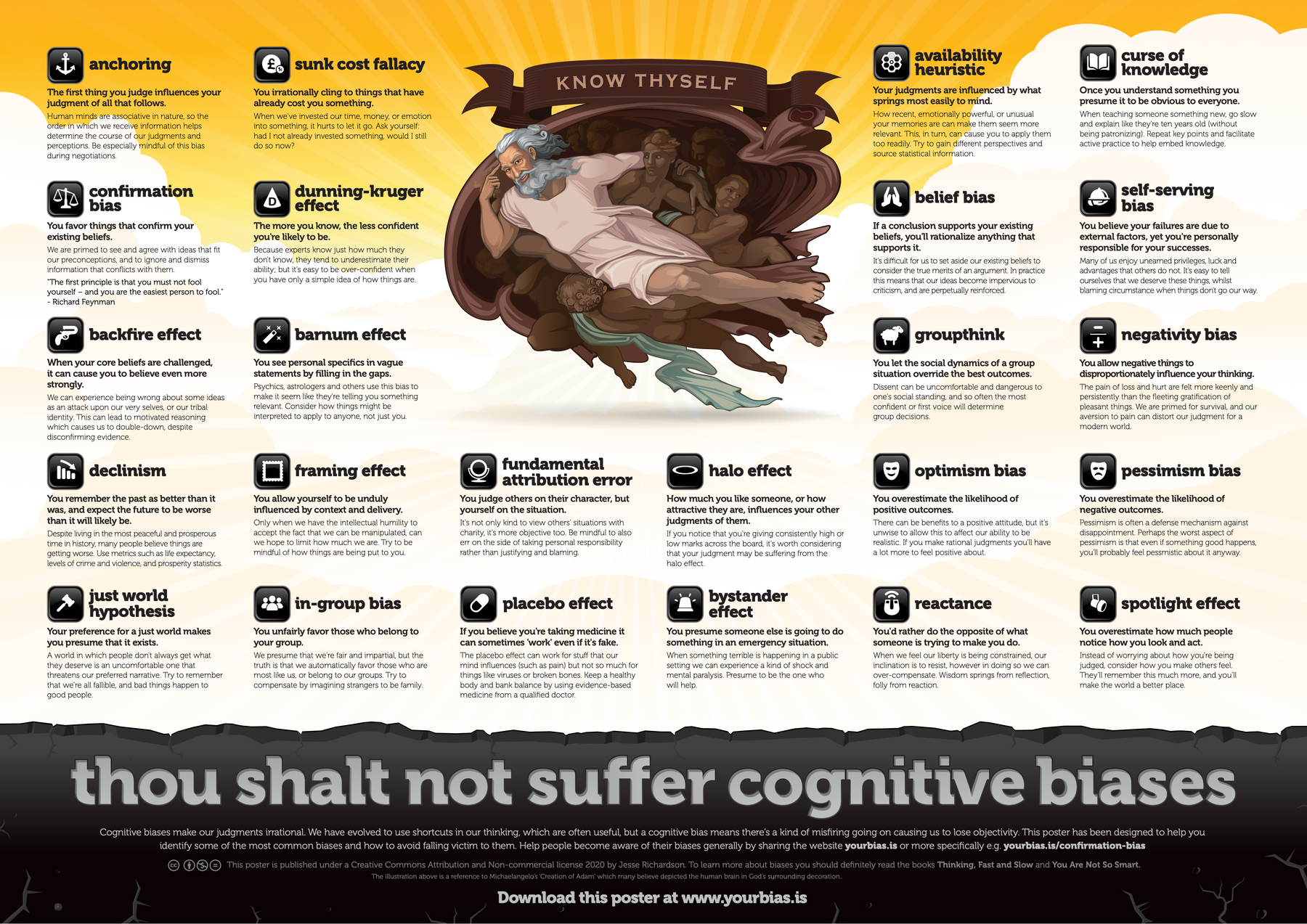
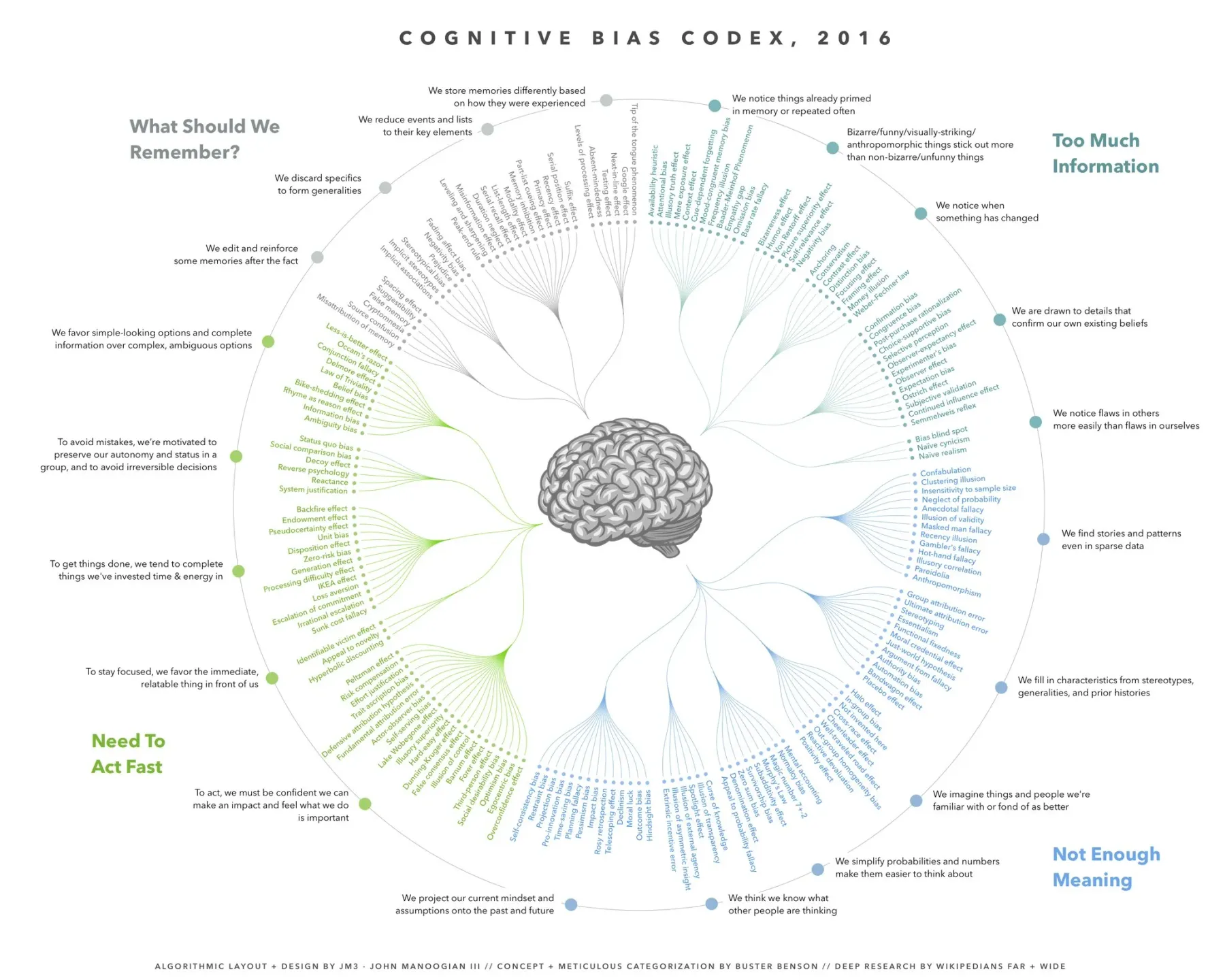
Cognitive biases are systematic patterns of deviation from rationality in judgment, where individuals create their own subjective reality from their perceptions of input. These biases often arise as a result of the brain’s attempt to simplify information processing. Below is a breakdown of some of the most common cognitive biases:
1. Confirmation Bias
- Definition: The tendency to search for, interpret, and remember information that confirms pre-existing beliefs or theories, while ignoring or dismissing evidence that contradicts them.
- Example: A person who believes in astrology may only remember times when their horoscope was accurate while ignoring times it was wrong.
2. Anchoring Bias
- Definition: The reliance on the first piece of information encountered (the “anchor”) when making decisions. Once an anchor is set, people tend to interpret further information based on it.
- Example: In a negotiation, the first price offered sets the standard for the discussion, even if it is arbitrary or unreasonable.
3. Availability Heuristic
- Definition: Overestimating the likelihood of events based on how easily examples come to mind. This often leads to a distortion of reality, as vivid or recent information is given more weight.
- Example: After seeing news reports of airplane crashes, a person might overestimate the risk of air travel, even though statistically, it is much safer than driving.
4. Hindsight Bias
- Definition: The tendency to see events as having been predictable after they have occurred, often leading to the belief that one “knew it all along.”
- Example: After a stock market crash, an investor might claim they saw the signs of the impending downturn, even though they took no action beforehand.
5. Self-Serving Bias
- Definition: The habit of attributing positive outcomes to oneself and negative outcomes to external factors, often to maintain self-esteem.
- Example: A student who gets a good grade on a test credits their hard work and intelligence, but if they receive a bad grade, they blame the teacher or the test being unfair.
6. Dunning-Kruger Effect
- Definition: A cognitive bias where people with low ability, knowledge, or expertise in a domain overestimate their competence, while those with higher ability tend to underestimate theirs.
- Example: A novice chess player might think they are better than they actually are, while a more experienced player may doubt their abilities despite being skilled.
7. Framing Effect
- Definition: The way information is presented (the “frame”) influences decision-making. People react differently depending on whether a choice is framed in terms of potential losses or gains.
- Example: People are more likely to opt for a medical procedure when told it has a 90% survival rate rather than when told it has a 10% death rate, even though both statements are statistically identical.
8. Sunk Cost Fallacy
- Definition: The tendency to continue investing in a decision or project based on the cumulative prior investment (time, money, resources), even when it’s no longer rational to do so.
- Example: Continuing to repair an old car even when the cost of repairs exceeds the value of the car, simply because of the money already spent on previous repairs.
Pinker’s Chapter 5 supplement — availability, cluster illusion, and escalating commitment in war
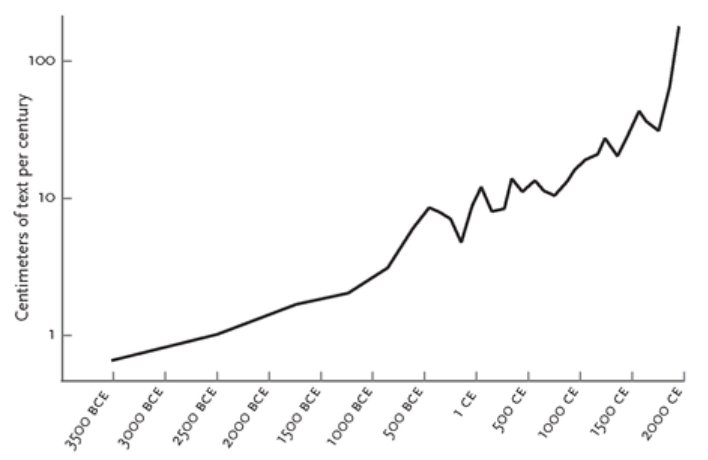
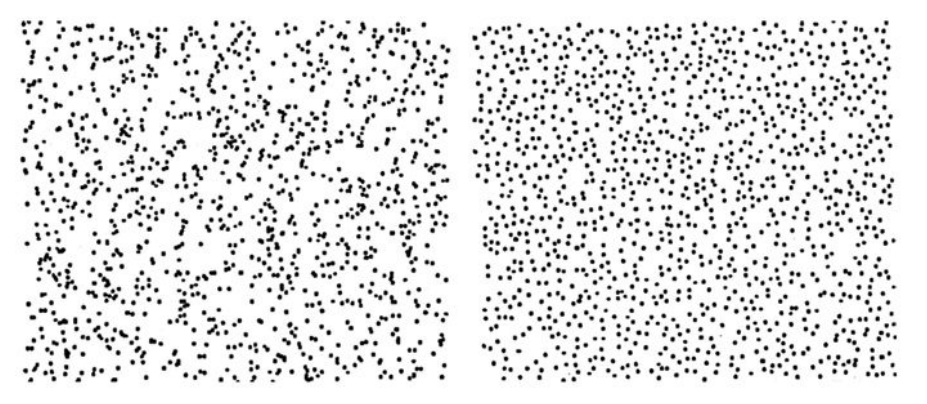
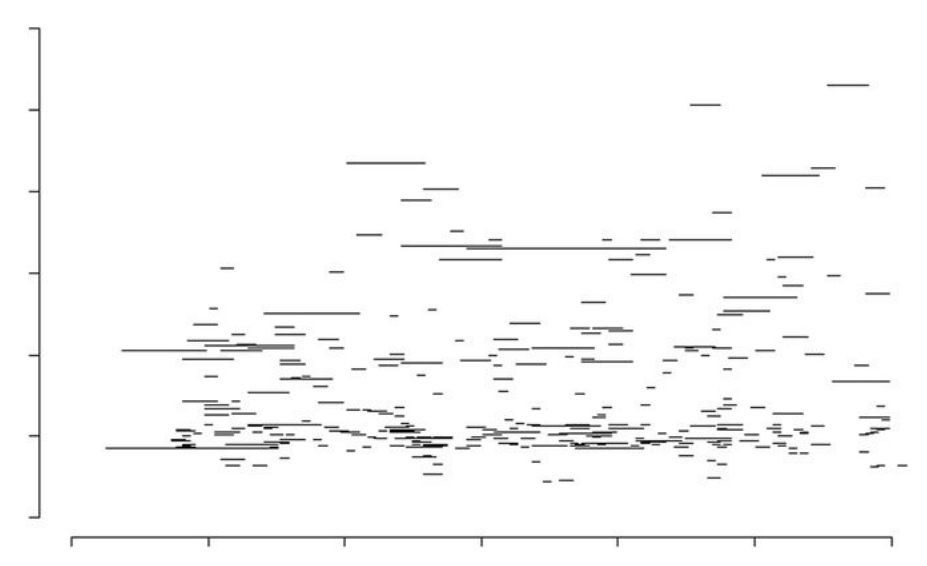
Pinker joins three biases that are usually taught separately. Historical myopia gives recent centuries denser records, while the availability heuristic makes vivid and familiar wars feel more frequent. Cluster illusion then makes randomly timed events look like cycles or historical crescendos. In Lewis Fry Richardson’s catalog, the start and end dates of “deadly quarrels” were broadly compatible with a Poisson process: clumps can occur without a periodic engine. This does not mean wars lack causes; it means that causes need not combine into a dependable cycle.
Figures 5-4 to 5-6 — Uneven historical coverage, apparently patterned random dots, and Richardson’s conflict data. Pinker also connects loss aversion and sunk costs to wars of attrition: leaders can treat prior deaths as a reason to commit still more people—“so they shall not have died in vain”—and use persistence as a costly signal of resolve. His proposed escalation mechanism is plausible, not a universal diagnosis of long wars. The figures rely on an almanac-content proxy and Richardson’s 1820–1952 data, so they are methodological illustrations rather than a current conflict forecast. Chapter 5 synthesis · Availability and historical myopia, PDF pp. 280–288 (file not included in this release) · Figure 5-4, PDF p. 288 (file not included in this release) · Random clustering and Figures 5-5 to 5-6, PDF pp. 295–296 (file not included in this release) · Sunk costs and wars of attrition, PDF pp. 315–316 (file not included in this release)
Pinker’s Chapter 6 supplement — terrorism exploits availability, dread, and the conjunction fallacy
Terrorism is designed to produce a high fear-to-harm ratio. Novelty, uncontrollability, intentional malice, and the prospect of catastrophe make an attack unusually available in memory, so subjective risk can outrun base rates and prompt risk displacement. Pinker cites an estimate that reduced flying after 9/11 produced about 1,500 additional road deaths in the following year; it is an estimate of a behavioral consequence, not a claim that terrorism should be ignored.
In a survey of 177 internet users, respondents judged an Iran-sponsored nuclear terrorist attack more likely than a nuclear attack—even though the first is a subset of the second. That is the conjunction fallacy: added narrative detail can make a scenario feel more plausible while mathematically making it no more probable. These examples come from a 2011 synthesis and are lessons in calibrated risk analysis, not current forecasts of terrorism or Iran. Chapter 6 synthesis · Terrorism, dread, and risk displacement, PDF pp. 481–485 (file not included in this release) · Nuclear scenarios and the conjunction fallacy, PDF pp. 515–519 (file not included in this release)
Pinker’s Chapter 7 supplement — stranger danger, denominators, and risk displacement
Pinker uses stranger abduction to show how an emotionally vivid numerator can overwhelm its population denominator. He reports that U.S. stranger abductions fell from roughly 200–300 a year in the 1990s to about 100 around the book’s evidence window, about half ending in murder. With roughly 50 million children, he converts that to an annual homicide risk near one in a million and contrasts it with substantially larger drowning and traffic risks. Warwick Cairns’s claim that an unattended child would wait about 750,000 years for an overnight stranger abduction is a deliberately vivid illustration based on an average rate, not a prediction for a particular child, place, or circumstance.
The cognitive error is not caring too much about children. It is treating one named danger as if precautions had no costs or substitution effects. Pinker calls symbolic measures such as milk-carton photographs and some public alerts crime-control theater when they advertise action without a demonstrated reduction in harm. He further cites an estimate that school-run traffic hits more children than other traffic, illustrating how driving to avoid an extremely rare kidnapping can transfer risk to the road. That claim is about aggregate tradeoffs, not a recommendation to leave a child unsupervised.
These are U.S. figures available to a 2011 author, not current local safety guidance. The durable reasoning rule is to compare like denominators, distinguish absolute from relative risk, inspect intervention side effects, and update the base rate before changing practice. Chapter 7 synthesis · Kidnapping fear and base rates, PDF pp. 617–618 (file not included in this release) · Crime-control theater and displaced risk, PDF p. 619 (file not included in this release)
Pinker’s Chapter 8 supplement — the Moralization Gap, overconfidence, and escalation
Pinker’s Moralization Gap joins several biases that are often studied separately. In recalled conflicts, victims tend to widen the time frame, emphasize lasting damage, and infer hostile intent; perpetrators tend to begin the story at the provocation, minimize the harm, and describe constraint or misunderstanding. In a controlled ambiguous-roommate vignette, merely assigning participants the victim’s or perpetrator’s viewpoint changed which details they remembered relative to a neutral-observer condition. This does not show that every conflict is symmetrical or that facts are unknowable; it shows why sincere recollection is not a neutral ledger.
Overconfidence can then turn biased narratives into action. Pinker reports a war-game experiment in which confidence predicted worse performance and more unprovoked attacks, alongside historical work arguing that states initiating wars lost surprisingly often. These findings are a 2011 synthesis, not a universal law of leaders or a current conflict forecast.
A finger-pressure experiment supplies the cleanest model of escalation. Two participants alternated reproducing the force they had just felt. After eight turns, the second participant applied about eighteen times the opening pressure because people underestimated the force they themselves exerted, adding roughly 40% each round. Pinker’s analogy is moral rather than literal: retaliation can escalate while each side sincerely believes it is only matching the other. Chapter 8 synthesis · Moralization Gap experiments, PDF pp. 675–680 (file not included in this release) · Overconfidence and conflict, PDF pp. 707–710 (file not included in this release) · Finger-pressure escalation, PDF p. 742 (file not included in this release)
9. Bandwagon Effect
- Definition: The tendency to do or believe things because many other people do or believe the same, often leading to groupthink.
- Example: Investing in a particular stock because everyone else is, regardless of personal research or market analysis.
10. Halo Effect
- Definition: The tendency for a positive impression of a person, company, or product in one area to influence opinions in other areas.
- Example: Assuming someone is intelligent and kind just because they are physically attractive, without having additional information.
11. Negativity Bias
- Definition: The inclination to focus more on negative experiences or information rather than positive ones, often leading to a disproportionate focus on problems or threats.
- Example: After receiving both positive and negative feedback, a person may dwell on the criticism and forget about the praise.
12. Optimism Bias
- Definition: The belief that negative events are less likely to happen to oneself compared to others, leading to an overestimation of favorable outcomes.
- Example: A smoker might believe that they are less likely to get lung cancer compared to other smokers.
13. Ingroup Bias
- Definition: The tendency to favor people who are part of one’s own group (whether based on race, nationality, religion, or even social groups) over those from outside the group.
- Example: Giving preferential treatment to someone from your hometown over someone from a different city, despite having no other reason to do so.
14. Loss Aversion
- Definition: The tendency to prefer avoiding losses over acquiring equivalent gains. In other words, the pain of losing something is stronger than the pleasure of gaining something.
- Example: Most people would rather avoid losing $100 than gaining $100, even though both scenarios have the same monetary value.
15. Recency Bias
- Definition: The tendency to weigh recent information more heavily than earlier information, giving disproportionate importance to recent events or experiences.
- Example: After a few good days in the stock market, an investor might believe that the market will continue to rise, even though broader trends suggest otherwise.
16. Status Quo Bias
- Definition: The preference for things to stay the same, or for the current state of affairs to continue, rather than making changes, even when change might lead to better outcomes.
- Example: Continuing to use an old phone or software because it’s familiar, even though a new model or update offers superior features and performance.
17. Overconfidence Bias
- Definition: The tendency to be more confident in one’s judgments, abilities, or predictions than is objectively justified.
- Example: A person may believe they can accurately predict stock market trends, even though such predictions are inherently uncertain.
18. Choice-Supportive Bias
- Definition: Once a choice is made, individuals often retrospectively ascribe positive attributes to that choice, even if the decision was flawed.
- Example: After buying a car, a person might focus on the car’s good points and ignore or downplay its flaws to feel better about their decision.
19. Fundamental Attribution Error
- Definition: The tendency to attribute other people’s actions to their character or personality, while attributing our own actions to external circumstances.
- Example: If someone cuts us off in traffic, we assume they are a rude person, but if we do it ourselves, we justify it by saying we were in a hurry.
20. Actor-Observer Bias
- Definition: A bias where people attribute their own actions to external factors, but attribute others’ actions to internal factors.
- Example: If you fail an exam, you might blame the difficulty of the questions, but if someone else fails, you might think they didn’t study enough.
These biases highlight the many ways in which human judgment can be flawed or skewed, leading to less-than-optimal decision-making in everyday life. Recognizing these biases is the first step toward mitigating their influence.
📚 Connected Book Sections
- A Mind of Its Own — extended examples of confirmation, anchoring, availability, hindsight, illusory correlation, and overconfidence.
- Traffic — risk compensation, attention limits, attribution errors, and overconfidence in a real-world system.
- The Stuff of Thought — the curse of knowledge and how language hides assumptions from speakers.