⬅️ Back to 60.12 Self-Improvement · Hub: Communication MOC · Cross: Rhetoric & Persuasion (MOC)
Frameworks for talking to anyone (FORM, LEAPS, tactical empathy) plus the full Communication Skills Operating System below.
Related notes
- Articulation · How to articulate your thoughts more clearly than 99% of people · Speaking · Think Faster Talk Smarter - Matt Abrahams
- Assertive vs Passive Voice · Confident Delivery Calibrated Claims · Conversationist Research
- Speaker studies: Nick Fuentes — High-Arousal Moral Polemic
- Persuasion · Leadership · Cross-vault → Argumentation quotes · Social quotes
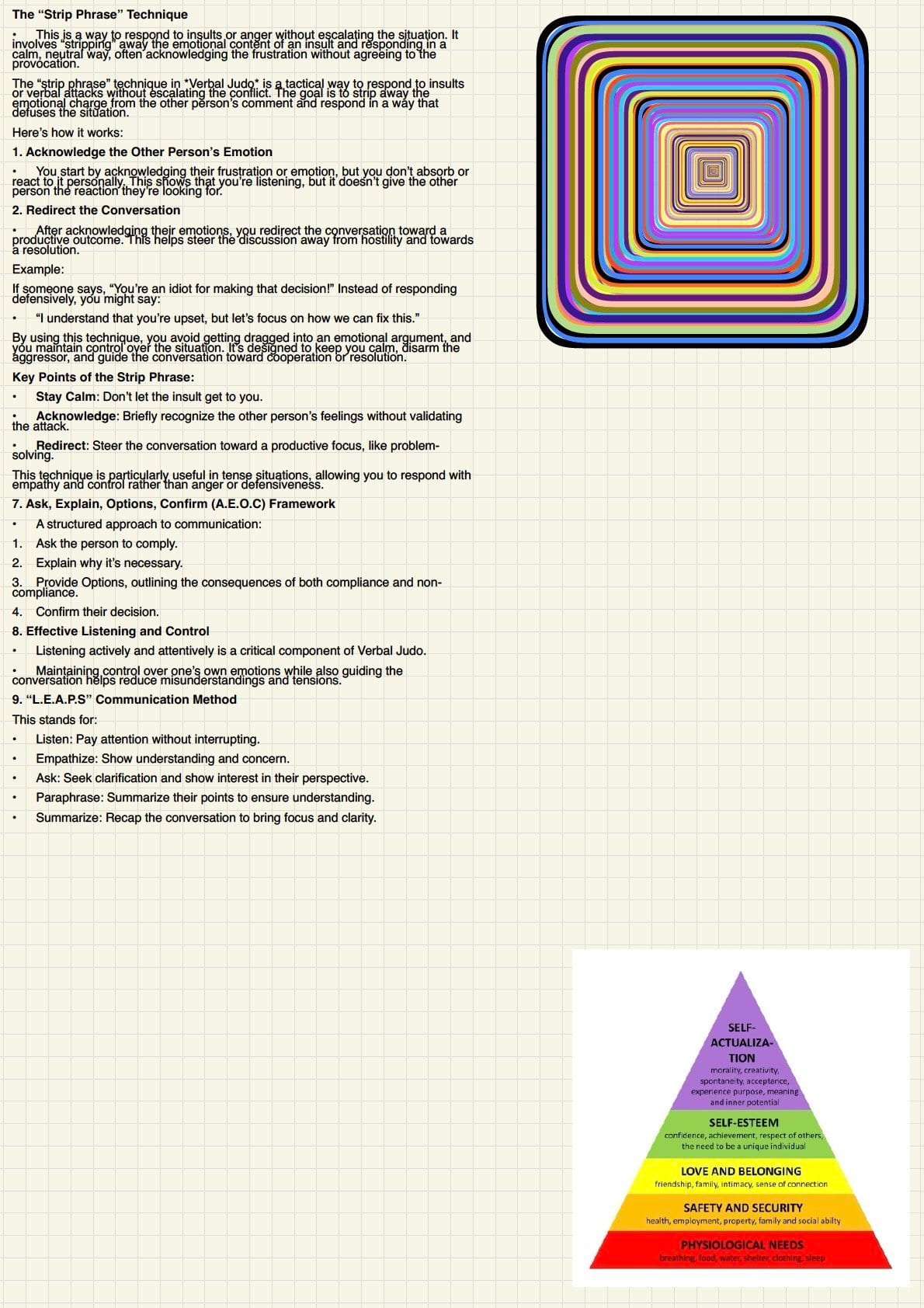

FORM Framework for Small Talk How to Talk to Anyone About Anything - James W Williams
In How to Talk to Anyone About Anything by James W. Williams, the FORM framework is a simple small-talk structure for keeping conversations moving without sounding random.
FORM = Family, Occupation, Recreation, Motivation
F — Family
Ask light, non-invasive questions about family, background, or where someone is from.
Examples:
- “Are you originally from here?”
- “Do you have family nearby?”
- “How long have you lived in this area?”
Avoid making it too personal too fast. “Family” can be sensitive, so start broad.
O — Occupation
Ask about work, business, school, or what they spend their time doing.
Examples:
- “What kind of work do you do?”
- “How did you get into that?”
- “What’s the most interesting part of your job?”
For business or leadership settings, this is often the easiest entry point.
R — Recreation
Ask about hobbies, interests, weekends, sports, travel, books, shows, or activities.
Examples:
- “What do you usually do outside of work?”
- “Anything you’ve been into lately?”
- “What do you do to unwind?”
This is often where the conversation becomes more natural because people talk about what they enjoy.
M — Motivation
Ask about goals, values, ambitions, reasons, or what drives them.
Examples:
- “What made you choose that path?”
- “What are you working toward right now?”
- “What do you like most about that?”
- “What got you interested in it?”
This is the deeper layer. It moves the conversation from facts to meaning.
How to use it naturally
Don’t run through FORM like a checklist. Use it as a mental map.
A good flow might look like:
“Are you from South Florida originally?”
“What kind of work do you do?”
“What do you like doing outside of work?”
“What got you interested in that?”The most important part is to listen for emotional hooks. When someone says something with energy, curiosity, frustration, pride, or humor, follow that thread instead of forcing the next category.
Better version for your purpose
For interpersonal, small business, and leadership communication, I’d modify it slightly:
Context → Work → Interest → Motivation → Follow-up
Example:
“How do you know everyone here?”
“What kind of work are you focused on lately?”
“What do you enjoy most outside of that?”
“What made that important to you?”
“That’s interesting—how did you get started?”That makes FORM less like “small talk” and more like a path toward rapport.
The LEAPS model from George J. Thompson’s Verbal Judo is a tactical listening framework used to calm conflict, build rapport, and gain voluntary compliance.
LEAPS = Listen, Empathize, Ask, Paraphrase, Summarize
L — Listen
Give the other person enough space to speak without interrupting, correcting, or preparing your rebuttal too quickly.
The purpose is not passive agreement. It is intelligence gathering. You are listening for:
- What they want
- What they fear
- What they misunderstand
- What emotion is driving the conflict
- What outcome they think would be fair
Example:
“Tell me what happened from your point of view.”
E — Empathize
Show that you understand the person’s emotional state, even if you disagree with their facts, tone, or conclusion.
Empathy does not mean approval. It means you recognize the feeling underneath the words.
Example:
“I can see why that would be frustrating.”
Or:
“I’d be annoyed too if I thought I was being ignored.”
This lowers defensiveness because the person no longer feels forced to prove that their frustration is valid.
A — Ask
Ask questions to gather facts, redirect emotion, and create cooperation.
Good questions are usually calm, specific, and purposeful.
Examples:
“What were you expecting to happen?”
“What would help fix this from your perspective?”
“When did this start?”
“Who else was involved?”
“What do you need from me right now?”Questions move the conversation from emotional discharge toward problem-solving.
P — Paraphrase
Restate the person’s meaning in your own words. This proves you heard them and gives them a chance to correct misunderstandings.
Example:
“So what I’m hearing is that you’re not mainly upset about the delay. You’re upset because no one told you what was going on.”
Paraphrasing is powerful because it makes the other person feel understood without forcing you to concede.
S — Summarize
Condense the conversation into the key facts, concerns, and next steps.
Example:
“Let me make sure I have this right: the order was supposed to arrive Monday, no one updated you, and now you need a clear answer by the end of today. I’m going to check the status and call you back by 3 p.m.”
Summarizing creates closure and turns a tense exchange into an action plan.
Simple LEAPS Script
Use this in a difficult conversation:
“Tell me what happened.”
“I can see why that would bother you.”
“What were you expecting instead?”
“So the main issue is not just what happened, but that you felt blindsided.”
“Here’s what I understand, and here’s what I’m going to do next.”Why LEAPS Works
LEAPS works because it follows the emotional order of conflict. Most people cannot think clearly until they feel heard. The model first reduces emotional resistance, then gathers information, then moves toward resolution.
For interpersonal and leadership communication, the key lesson is:
Do not start by explaining, defending, or correcting. Start by listening, naming the concern, asking useful questions, and summarizing a path forward.
Creating Rapport Never Split the Difference
1. Start with tactical empathy
The first move is to focus completely on the other person.
Do this by:
- Listening intensively
- Taking it slow
- Making them feel safe and understood
- Identifying what they need
- Radiating warmth and acceptance
- Keeping a positive frame of mind
- Avoiding the urge to immediately argue, correct, or explain
The principle:
People open up when they feel you are trying to understand them, not overpower them.
2. Mirror them
Mirroring builds rapport by showing that you are tracking their words, rhythm, and emotional state.
Your notes define mirroring as matching:
- Speech patterns
- Body language
- Vocabulary
- Tempo
- Tone of voice
The simplest version:
Repeat the last three words, or the critical one to three words, of what someone said.
Example:
They say:
“I just don’t think this is going to work.”
You say:
“Going to work?”
Then pause.
Mirroring works because it encourages the other person to keep talking, explain themselves, and reveal more information without feeling interrogated.
3. Label their emotions
After listening and mirroring, identify the person’s emotional state and name it.
Use:
“It seems like…”
“It sounds like…”
“It looks like…”Examples:
“It sounds like you’re frustrated by how this was handled.”
“It seems like you feel rushed into this.”
“It looks like something about this doesn’t sit right with you.”Keep the label neutral. Do not say:
“I think you’re angry.”
That makes it about your judgment. Instead say:
“It seems like this has been frustrating.”
If they disagree, your notes give the fallback:
“I didn’t say that was what it was. I just said it seems like that.”
The purpose of labeling is to clear emotional barriers to agreement.
4. Let them say “No”
Your notes frame “No” as the start of negotiation, not the end. “No” gives the other person a feeling of security and control.
Instead of pushing for yes, ask questions that make it safe to say no.
Examples:
“Would it be a bad idea to talk this through?”
“Is now a bad time?”
“Is this completely off the table?”After they say no, ask:
“What about this doesn’t work for you?”
“What would you need to make it work?”
“It seems like there’s something here that bothers you.”This lowers defensiveness because the other person does not feel trapped into agreement.
5. Aim for “That’s right”
The key rapport moment is not when they say:
“You’re right.”
Your notes say that is a disaster because it often means they are dismissing you or trying to end the conversation.
The goal is:
“That’s right.”
“That’s right” happens when the person feels you truly understand their thoughts, feelings, fears, and desires.
To get there, use:
Label + Paraphrase + Summary
Example:
“It sounds like you’re not against the idea itself. You’re worried that if we move too fast, you’ll be stuck dealing with the problems afterward. So the real issue is not resistance—it’s risk.”
If they say:
“That’s right.”
You have rapport.
6. Use calibrated questions
Calibrated questions create rapport because they make the other person feel respected and involved in solving the problem.
Best question starters:
“What…”
“How…”Use “why” carefully because your notes say it can sound accusatory.
Strong examples:
“How does this look to you?”
“What about this works for you?”
“What about this doesn’t work for you?”
“How am I supposed to do that?”
“What would you need to make this work?”The hidden message of a good calibrated question is:
“I want to understand your view, and I need your help solving this.”
That gives the other person the illusion of control, which reduces resistance.
7. Use an accusation audit when tension is high
Before the other person attacks you, name the negative things they may already be thinking.
Example:
“You may feel like I’m pushing this too hard.”
“You may think I haven’t listened closely enough.”
“You may feel like this decision was already made.”This creates rapport because it shows you are not hiding from the tension. You are naming it directly.
The Tight Rapport Script
Use this sequence:
“Tell me how you’re seeing this.”
“It sounds like [emotion/concern].”
“What about this doesn’t work for you?”
“So if I’m hearing you right, [paraphrase their view].”
“That’s right?”
“What would you need to make this work?”The Core Principle
Rapport is not charm. It is tactical empathy plus emotional accuracy.
You create it by slowing down, listening hard, mirroring their words, labeling their emotions, letting them feel in control, and summarizing their view so well that they say:
“That’s right.”
Communication Skills Operating System
The most important ideas from the recommended books, combined into a practical system
The books overlap around one core idea:
Good communication is not “sounding impressive.” It is making other people feel understood, making your point clear, and guiding the conversation toward a useful outcome.
For your goal — interpersonal confidence, small business-group communication, and leadership — the most important skills are:
- Presence
- Clarity
- Listening
- Emotional control
- Persuasion
- Conflict handling
- Leadership language
- Memorable explanation
- Feedback handling
- Deliberate practice
1. Presence: Make People Feel You Are Actually There
Draws from:
The Charisma Myth, How to Win Friends and Influence People, Crucial Conversations
Most people think charisma means being energetic, funny, or dominant. The better definition is:
Charisma = presence + warmth + quiet confidence.
Presence is the foundation. If you seem distracted, rushed, defensive, or self-conscious, people feel it immediately.
Core principle
People are less persuaded by your words when they feel you are not fully attending to them.
What to implement
In one-on-one conversations
Before responding, pause for half a second.
Do not rush to prove you understand. Actually understand first.
Use phrases like:
- “Let me make sure I’m understanding you.”
- “So the real concern is…”
- “What I’m hearing is…”
- “Is that the part that bothers you most?”
This makes people feel seen without you becoming passive.
In small groups
When speaking, slow down slightly and hold your point. Do not talk as if you are trying to survive the room.
Use fewer words, more deliberate pacing, and cleaner transitions.
Bad pattern:
“So yeah, I mean, basically, I think maybe we should kind of try to…”
Better pattern:
“Here’s my view. We should focus on the highest-leverage problem first: client response time.”
Practice drill
Once per day, practice a 60-second explanation where your only goal is to speak slower than normal.
Record yourself and check:
- Are you rushing?
- Are you filling every silence?
- Do you sound like you believe your own point?
- Are you ending sentences with upward uncertainty?
2. Clarity: Say the Point Before the Explanation
Draws from:
The First Minute, Simply Said, Made to Stick
This is probably the highest-return skill for you.
Many people lose confidence because they start talking before they know the shape of their point. Then they ramble, notice they are rambling, become self-conscious, and lose authority.
Core principle
State the point first. Then explain.
Most business communication should start with:
- Context
- Point
- Reason
- Next step
The basic template
Use this in meetings, small groups, and leadership conversations:
“The issue is __.
My main point is __.
The reason is __.
The next step should be __.”
Example:
“The issue is that our follow-up time is too slow. My main point is that we need a same-day response rule for new leads. The reason is that speed is probably costing us conversions. The next step should be testing a 24-hour response standard for two weeks.”
That is clear, confident, and non-rambling.
The First Minute principle
Do not begin with background unless the listener needs it.
Bad:
“So last week I was looking at some of the numbers, and I noticed a few things, and then I was thinking about how this connects to what we talked about before…”
Better:
“I found one issue in the numbers: our response time is likely hurting conversions.”
What to implement
Before any important conversation, write one sentence:
“The one thing I need them to understand is…”
Then build everything around that.
Practice drill
Pick any topic and explain it in 30 seconds:
- What is the point?
- Why does it matter?
- What should happen next?
Do not allow yourself to use more than three sentences.
3. Listening: Make the Other Person Feel Understood Before You Try to Influence Them
Draws from:
How to Win Friends and Influence People, Crucial Conversations, Thanks for the Feedback, Verbal Judo
Listening is not just being polite. It is strategically important.
People become more open to your view after they believe you understand theirs.
Core principle
You earn the right to be persuasive by first showing that you understand the other person’s concern.
The best listening sequence
Use this order:
- Ask
- Mirror
- Label
- Clarify
- Respond
Example:
“What’s your main concern with this plan?”
“So you’re worried the timeline is too aggressive.”
“That makes sense — the risk is that we move fast but create mistakes.”
“Is your main concern the deadline itself or the resources?”
“Here’s how I’d adjust the plan.”
What to avoid
Do not immediately say:
- “That’s not what I meant.”
- “You’re misunderstanding me.”
- “No, the real issue is…”
- “Actually…”
Those phrases often trigger defensiveness.
Better:
“I see why it sounds that way. Let me clarify what I mean.”
Practice drill
In your next real conversation, aim to summarize the other person’s view before giving your own.
Use:
“Before I respond, let me make sure I have your point right.”
This is one of the fastest ways to sound more mature and confident.
4. Emotional Control: Stay Calm When the Stakes Rise
Draws from:
Crucial Conversations, Verbal Judo, Thanks for the Feedback, The Charisma Myth
Confidence is easiest when the conversation is friendly. Real confidence shows when there is pressure, disagreement, criticism, or tension.
Core principle
The person who stays calm has more control over the conversation.
This does not mean being weak. It means not being emotionally hijacked.
The “pause and name” technique
When you feel yourself getting defensive, pause and internally name what is happening:
- “I’m feeling attacked.”
- “I want to interrupt.”
- “I’m trying to win instead of understand.”
- “I’m about to escalate.”
Naming the reaction gives you enough distance to choose your response.
Better phrases under pressure
Instead of:
“That’s not true.”
Say:
“I see it differently.”
Instead of:
“You’re wrong.”
Say:
“I think there’s another way to interpret this.”
Instead of:
“That makes no sense.”
Say:
“Help me understand how you’re getting there.”
Instead of:
“You always do this.”
Say:
“The pattern I’m noticing is…”
The Verbal Judo principle
Never let someone else’s tone determine your tone.
If they get emotional, you become more precise.
If they get vague, you ask clarifying questions.
If they get aggressive, you slow the pace.
Practice drill
Write down three situations where you commonly get defensive.
For each one, create a pre-planned response.
Example:
Trigger: Someone criticizes my idea in a meeting.
Default reaction: Explain too fast or become annoyed.
Prepared response:
“That’s a fair concern. Which part do you think is weakest — the idea itself, the timing, or the execution?”
This turns criticism into useful information.
5. Persuasion: Start From Their Interests, Not Your Argument
Draws from:
Thank You for Arguing, How to Win Friends and Influence People, Made to Stick, Simply Said
Persuasion is not just having the better argument. It is connecting your argument to what the other person already cares about.
Core principle
People are persuaded faster when they see how your point serves their interests, values, or problems.
The persuasion formula
Before trying to persuade someone, ask:
- What do they care about?
- What are they afraid of?
- What would count as a win for them?
- What objection are they likely to have?
- How can I frame my point in their language?
Example:
You want a team member to adopt a new process.
Weak version:
“We need to do it this way because it’s better.”
Stronger version:
“This will reduce the number of follow-up questions you get later and make the handoff cleaner.”
You translated your point into their benefit.
Rhetorical triad
From Thank You for Arguing, persuasion usually has three parts:
Ethos: credibility
Do they trust you?
Build it by being fair, prepared, honest, and calm.
Logos: logic
Does your argument make sense?
Build it with structure, evidence, and clear reasoning.
Pathos: emotional relevance
Do they feel why it matters?
Build it with examples, stakes, stories, and consequences.
Practical persuasion template
“I understand your concern.
The reason I still recommend this is __.
The risk of not doing it is __.
The benefit of doing it is __.
We can reduce your concern by __.”
Example:
“I understand your concern about adding another process. The reason I still recommend this is that our current follow-up system is inconsistent. The risk of not changing it is that good leads keep falling through the cracks. The benefit of changing it is that every lead gets handled the same day. We can reduce the burden by using a simple checklist instead of a complicated CRM process.”
Practice drill
Take any opinion you hold and explain it three ways:
- To someone who already agrees.
- To someone neutral.
- To someone skeptical.
This teaches you to adapt instead of just repeat yourself.
6. Conflict Handling: Make It Safe to Tell the Truth
Draws from:
Crucial Conversations, Verbal Judo, Thanks for the Feedback
Conflict conversations fail when people feel unsafe. They either attack, withdraw, manipulate, or become defensive.
Core principle
The goal is not to avoid tension. The goal is to keep the conversation productive while tension exists.
The Crucial Conversations model
When a conversation becomes difficult, ask:
- What do I really want?
- What do they probably want?
- What do I want for the relationship?
- How can I speak honestly without damaging trust?
This prevents you from trying to “win” the conversation at the cost of the relationship.
The best conflict opener
Use this:
“I want to talk about something directly, but I want to do it in a way that’s fair.”
That signals both honesty and goodwill.
For giving criticism
Use this structure:
- State the shared goal.
- Describe the specific behavior.
- Explain the impact.
- Ask for their view.
- Agree on the next step.
Example:
“I want us to handle clients more consistently. I noticed the last two leads were not followed up with until two days later. The impact is that we may be losing business. What’s getting in the way of same-day follow-up? Let’s figure out a process that makes this easier.”
This is firm without being personally attacking.
For receiving criticism
Use:
“What’s one specific thing you think I should do differently?”
This moves criticism from vague judgment to actionable feedback.
Practice drill
Prepare a script for one conversation you are avoiding.
Use:
“The issue I want to discuss is __.
The pattern I’m noticing is __.
The impact is ____.
I want to understand your side before deciding what to do next.”
7. Leadership Communication: Ask Better Questions Before Giving Orders
Draws from:
Leadership Is Language, Simply Said, Crucial Conversations
Leadership communication is not just telling people what to do. It is creating clarity, ownership, and good judgment.
Core principle
Leaders should use language that makes people think, not language that makes people passive.
A weak leader overuses commands.
A better leader uses a mix of clarity, questions, standards, and accountability.
Replace command-heavy language
Instead of:
“Do this.”
Use:
“Here’s the outcome we need. What’s the best way to get there?”
Instead of:
“Why did you do that?”
Use:
“Walk me through your thinking.”
Instead of:
“That won’t work.”
Use:
“What risk do you see in that approach?”
Instead of:
“I need this done.”
Use:
“The deadline is Friday because the client needs an answer before the weekend. What do you need to get it done?”
Leadership communication sequence
When leading a small group, use this:
- Purpose — why this matters
- Priority — what matters most
- Standard — what good looks like
- Ownership — who is responsible
- Next step — what happens now
Example:
“The purpose is to improve client response time. The priority is same-day follow-up. The standard is that every new inquiry gets acknowledged before the end of the business day. John owns the first response. Maria owns tracking. The next step is testing this for two weeks and reviewing the numbers.”
Practice drill
Once a week, practice giving a two-minute leadership update:
“Here’s where we are.
Here’s what matters most.
Here’s the problem.
Here’s the decision.
Here’s what happens next.”
This builds small-group authority quickly.
8. Make Ideas Memorable: Use Simple, Concrete, Sticky Language
Draws from:
Made to Stick, Simply Said, The First Minute
People do not remember everything you say. They remember the simplest, clearest, most concrete version.
Core principle
If people cannot repeat your point, your point was not clear enough.
Make ideas stick with SUCCESs
From Made to Stick:
Simple
Strip the idea to its core.
Bad:
“We need to optimize communication responsiveness across client intake channels.”
Better:
“Every lead gets a same-day response.”
Unexpected
Show why the issue matters.
“We may not have a lead problem. We may have a follow-up problem.”
Concrete
Use observable facts.
“Three leads waited more than 48 hours for a reply.”
Credible
Use evidence or lived examples.
“The last two clients who booked responded within the first day.”
Emotional
Connect it to something people care about.
“When we respond late, clients feel like they are not important.”
Stories
Use a short example.
“Last week, a lead asked for availability Monday morning. We answered Wednesday. By then, she had already booked someone else.”
Practice drill
For any idea, create a one-sentence version:
“The main idea is…”
Then create a concrete example:
“For example…”
If you cannot give an example, you probably do not understand the idea well enough yet.
9. Feedback: Do Not Treat Criticism as an Attack on Your Identity
Draws from:
Thanks for the Feedback, Crucial Conversations, The Charisma Myth
A confident speaker is not someone who never receives criticism. It is someone who can receive criticism without collapsing or counterattacking.
Core principle
Feedback is data. It may be partly wrong, but it is rarely useless.
Three types of feedback
From Thanks for the Feedback:
Appreciation
“You are valued.”
Coaching
“Here is how to improve.”
Evaluation
“Here is where you stand.”
Problems happen when people confuse these.
Example:
You want appreciation, but someone gives coaching. You feel criticized.
They say:
“You should slow down when explaining things.”
You hear:
“You’re bad at communicating.”
Better response:
“That’s useful. Are you saying I’m giving too much detail, or that I’m speaking too quickly?”
Best feedback questions
Ask:
- “What is one thing I could make clearer?”
- “Where did I lose you?”
- “Did I give too much detail or not enough?”
- “What would have made that explanation stronger?”
- “What should I keep doing?”
Practice drill
After one conversation or meeting per week, ask one trusted person:
“What’s one thing I could have communicated more clearly?”
Do not defend yourself. Only ask follow-up questions.
10. Confidence: Build It Through Repetition, Not Self-Talk
Draws from all books, especially The Charisma Myth, Orai/Yoodli-style practice, The First Minute
Confidence is not mainly a feeling. It is a byproduct of preparation and repeated exposure.
Core principle
You become confident by proving to yourself that you can handle the situation.
Do not wait to feel confident before speaking. Speak in controlled reps until confidence catches up.
The confidence loop
- Prepare a small structure.
- Practice out loud.
- Record yourself.
- Get feedback.
- Repeat.
- Use it in real life.
- Reflect.
Confidence grows from evidence.
Practice drill
Use this every day for 5 minutes:
Minute 1: Pick a topic
Example:
- Why a client should choose you
- Why a process needs changing
- What you learned from a book
- A decision you need to explain
- A disagreement you need to handle
Minute 2: Write your point
“The one thing I want to say is…”
Minutes 3–4: Record yourself
Use Yoodli, Orai, voice memo, or video.
Minute 5: Review one thing
Only pick one thing to improve:
- too many filler words
- too fast
- unclear point
- weak ending
- too much detail
- not enough warmth
- monotone voice
Do not try to fix everything at once.
The Combined Communication Framework
Use this before important conversations.
1. Goal
What do I want this conversation to accomplish?
Example:
“I want them to understand why same-day follow-up matters and agree to test a new process.”
2. Audience
What do they care about?
Example:
“They care about not being overloaded and not using complicated systems.”
3. Main point
What is the one sentence they need to remember?
Example:
“We do not need more leads until we stop losing the ones we already get.”
4. Evidence
What proof or example supports it?
Example:
“Three recent inquiries waited over 48 hours for a response.”
5. Objection
What are they likely to resist?
Example:
“They may think this creates extra admin work.”
6. Response
How do I answer that objection fairly?
Example:
“We can make it simple: one same-day acknowledgement template and one follow-up reminder.”
7. Next step
What action should happen?
Example:
“Test this for two weeks and review whether lead conversion improves.”
Practical Scripts You Can Use
For making a point in a meeting
“Here’s the main issue: __.
The reason it matters is __.
My recommendation is __.
The next step should be __.”
For disagreeing without sounding combative
“I see the logic of that. I’d frame it slightly differently. My concern is ____.”
For handling criticism
“That may be fair. Can you give me a specific example so I can understand what to adjust?”
For redirecting a rambling conversation
“Let me bring us back to the main decision. Are we deciding __, or are we still discussing __?”
For giving feedback
“I want to flag something because I think it affects the outcome. I noticed __. The impact is __. How are you seeing it?”
For leading a small group
“The goal is __.
The priority is __.
The standard is __.
The owner is __.
The next step is ____.”
For speaking with more authority
“My view is __.
The reason is __.
I’d recommend ____.”
Avoid weakening phrases like:
- “I could be wrong, but…”
- “This may be stupid…”
- “I’m not sure if this makes sense…”
- “I just think…”
- “Kind of”
- “Maybe”
- “Sort of”
You can be humble without sounding uncertain.
Better:
“I may be missing something, but based on what I’m seeing, my recommendation is…”
The 30-Day Implementation Plan
Week 1: Clarity
Main books/principles: The First Minute, Simply Said
Daily drill:
Explain one idea in 60 seconds using: issue, point, reason, next step.
Goal:
- reduce rambling
- state your point earlier
- improve concise explanations
Measure:
- Can someone repeat your point after you say it?
Week 2: Listening and Presence
Main books/principles: How to Win Friends, The Charisma Myth
Daily drill:
In one real conversation per day, summarize the other person’s point before responding.
Use:
“So what you’re saying is…”
Goal:
- become less reactive
- make others feel understood
- slow down your responses
Measure:
- Did the other person say something like “Exactly” or “Yes, that’s what I mean”?
Week 3: Conflict and Feedback
Main books/principles: Crucial Conversations, Verbal Judo, Thanks for the Feedback
Daily drill:
Practice one difficult-conversation script.
Use:
“The pattern I’m noticing is…”
“The impact is…”
“How do you see it?”
Goal:
- stay calm under disagreement
- avoid defensive reactions
- speak directly but fairly
Measure:
- Did you remain calm?
- Did you ask a question before defending yourself?
- Did the conversation produce a next step?
Week 4: Leadership and Persuasion
Main books/principles: Leadership Is Language, Made to Stick, Thank You for Arguing
Daily drill:
Give a two-minute leadership update.
Use:
Purpose, priority, standard, owner, next step.
Goal:
- sound more authoritative
- lead discussion instead of merely participating
- make your ideas memorable
Measure:
- Was your message clear?
- Did you define the next step?
- Did people know what mattered most?
What to Practice in Yoodli or Orai
Since your best fit is Yoodli, use it for realistic interpersonal scenarios.
Yoodli prompts to practice
Leadership update
“I need to give a two-minute update to a small business team about why we need to improve client response time. Give me feedback on clarity, confidence, concision, and leadership presence.”
Difficult conversation
“Roleplay an employee who is defensive after I tell them their follow-up with clients has been inconsistent. Challenge me realistically.”
Client disagreement
“Roleplay a client who disagrees with my recommendation and thinks my price is too high. Help me practice staying calm, explaining value, and asking good questions.”
Small-group discussion
“Simulate a small team meeting where people disagree about priorities. Help me practice redirecting the conversation and making a clear recommendation.”
Impromptu answer
“Ask me five unexpected business questions and give feedback on whether my answers are concise and confident.”
Orai prompts to practice
Use Orai for mechanics:
- 60-second explanation
- remove filler words
- pacing control
- vocal variety
- avoiding monotone delivery
- reducing “um,” “like,” “you know,” “kind of,” “sort of”
Highest-Value Habits
If you only implement five habits, make them these:
1. Say the point first
“My main point is…”
2. Summarize before responding
“Let me make sure I understand…”
3. Ask one more question before arguing
“What’s your biggest concern with that?”
4. Speak in structure
Use:
“Issue, point, reason, next step.”
5. Record yourself daily
Even five minutes is enough if you do it consistently.
The Main Mistakes to Avoid
Mistake 1: Reading instead of practicing
Books help, but communication improves through reps.
Read one chapter, then practice one behavior.
Mistake 2: Trying to sound smart
Trying to sound smart often makes you less clear.
Aim to be understood.
Mistake 3: Overexplaining
Overexplaining weakens authority.
Make the point, give the reason, then stop.
Mistake 4: Defending too quickly
When challenged, ask a clarifying question first.
Mistake 5: Confusing confidence with dominance
Good confidence is calm, clear, and steady. It does not need to overpower people.
Your Best Starting Stack
For your stated goal, I would focus on these first:
- The First Minute — stop rambling and structure your thoughts.
- Crucial Conversations — handle tension and disagreement.
- Simply Said — improve business clarity.
- The Charisma Myth — build presence and confidence.
- Leadership Is Language — communicate like a leader.
Then add:
- How to Win Friends and Influence People
- Thanks for the Feedback
- Made to Stick
- Thank You for Arguing
- Verbal Judo
The One-Page System for Obsidian
Communication Practice System
Core Rule
Good communication = make people feel understood + make the point clear + guide toward a useful next step.
Before Speaking
- What is my goal?
- What is my one-sentence point?
- What does the other person care about?
- What objection will they likely have?
- What next step do I want?
Default Structure
Issue → Point → Reason → Next Step
Listening Script
“Let me make sure I understand you. You’re saying ____. Is that right?”
Disagreement Script
“I see the logic of that. I’d frame it differently. My concern is ____.”
Feedback Script
“I noticed __. The impact is __. How do you see it?”
Leadership Script
Purpose → Priority → Standard → Owner → Next Step
Daily Drill
Record a 60-second explanation:
- Point
- Reason
- Example
- Next step
Weekly Drill
Practice one difficult conversation:
- Shared goal
- Specific issue
- Impact
- Their view
- Next step
Metrics
- Did I state the point early?
- Did I avoid rambling?
- Did I ask before arguing?
- Did I summarize their view?
- Did I end with a next step?
Handwritten Notebook Pages
Source
- Open Conversation notebook pages — start at notebook p. 66 (file not included in this release)
- Open Communication notebook pages — start at notebook p. 94 (file not included in this release)
- Open Communicate notebook pages — start at notebook p. 164 (file not included in this release)