⬅️ Back to Timeline & History (MOC) · Previous: 1968-2023 · Arguments: Key Arguments (MOC) · Context: Gaza · Hamas · Iran & the Axis of Resistance (the regional war) · Laws of War (IHL) · Genocide · Jerusalem & Holy Sites (“Al-Aqsa Flood”)
The working file on Oct 7 and the war that followed: the attack itself, the sexual-violence evidence base, hostages, Hamas’s tactics, the IDF’s, the casualty-number fight, the media failures, and the international response. Argument-ready versions of several sections now live in their own notes — linked at the head of each section.
The scale, in American terms
By population ratio, October 7 equates to ~44,400 Americans killed and ~10,000 kidnapped in a single day. The defining feature was not just the killing but the relish and public boasting — killers phoning home to celebrate — in contrast to the Nazis’ attempt to conceal their crimes. → On Democracies and Death Cults (pp. 8, 12–14)
14-hour-old infant killed on October 7th
The 14-hour-old infant recognized as the youngest victim of the October 7, 2023, attacks in Israel was Naama Abu Rashed (also referred to in official documents via her family or background as part of the Abu Qrenat/Abu Rashed family). Her mother, who was nine months pregnant, was shot and critically wounded by Hamas terrorists while heading to the hospital. An emergency C-section was performed, but the newborn had already been wounded in the womb and passed away 14 hours later.
Background Details
- The Attack: On the morning of October 7, 2023, the family’s vehicle was fired upon by Hamas militants during the initial assault.
- Medical Intervention: The mother survived the shooting, but the unborn baby was struck by a bullet in utero. Doctors delivered the baby alive via emergency procedures at Soroka Medical Center, where medical staff fought to save her for 14 hours before she died.
- Official Status: Government and media tallies document her as the youngest fatality of the October 7 cross-border attacks.
1 https://www.gov.il/en/pages/swords-of-iron-civilian-casualties
2 https://www.telegraph.co.uk/news/2025/03/18/youngest-oct-7-victim-was-just-14-hours-old-report-finds/
4 https://www.barrons.com/news/how-many-children-were-killed-in-hamas-s-october-7-attack-9c1d8239
Decision-making dossier — strategy, disputes and rival aims
Coleman Hughes / Elliot Kaufman — source-audited argument, 5 October 2026
New source: Hamas strategy · Northern-front dispute · Raids versus invasion · Hostages versus defeating Hamas.
The emergency war cabinet was agreed on 11 October 2023; later composition should not be projected backward onto October 8. Contemporaneous Reuters record
Private conversations remain attributed testimony. Later outcomes do not prove every earlier decision optimal. Thousands of entrants is supportable as an estimate, but not every entrant was an identified Hamas fighter. Attack scale/categories
The source dossier preserves the complete supplied transcript, all question groups, claim audit, source register and strongest countercase.
🗺️ What’s here
- The attack itself · The all-female tank crews · Hostages
- Sexual violence: the evidence base → 📕 Silenced No More (Civil Commission, May 2026)
- Hamas tactics, human shields & aid · IDF tactics
- Casualties · Media · Governments, agencies & law
- Pro-Palestinian supporters · Pro-Israel · Footage
- Iran · Research & sources · Across the vault
Argument-ready versions of these sections
🔥 The Attack Itself
-
4000 Palestinians from Gaza came into Israel that day.
-
Rape? → full evidence base in the section below
- 5 female Israeli soldiers taken hostage by Hamas seen in sick new video
- How Hamas Weaponized Sexual Violence on Oct. 7 - The New York Times
- https://www.israelhayom.com/2024/05/23/like-father-like-son-hamas-terrorists-confess-to-rape-and-murder-of-civilians/
- 15 Witnesses, Three Confessions, a Pattern of Naked Dead Bodies. All the Evidence of Hamas Rape on October 7 - Israel News - Haaretz.com
- “I Was Wrong About Antisemitism.” Sheryl Sandberg on Waking Up - YouTube
-
Babies?
-
Apaches?
-
Destiny Notes - Oct 7th Invasion — sourced hour-by-hour reconstruction (belligerents, timeline, citations)
-
Hamas Plans
- Hamas Actually Believed It Would Conquer Israel. In Preparation, It Divided the Country Into Cantons - Israel News - Haaretz.com
- Why they did it, strategically → Attachment (file not included in this release) · Hamas in Its Own Words · Sinwar
Anti-Semitic Attacks
- Jewish girl, 12, gang raped in Paris in apparent antisemitic attack
- Full evidence file on the global post-Oct-7 surge → Attacks of Jews since October 7th 2023 · Antisemitism
🚺 The All-Female Tank Crews — Caracal’s “Pereh” Company
The one-line version
Seven women of the IDF’s all-female tank company — a pilot program male officers had spent years doubting — drove north from the Egyptian border on their own initiative, plugged the breached Gaza fence, and fought for ~17 hours straight, killing roughly 50 terrorists. It is described as the first time in modern military history that an all-female armored unit fought in combat.
The unit
- Company “Pereh” (פרא — “Wild”), the all-women tank company inside the Caracal Battalion (the IDF’s mixed-gender light infantry battalion, border-defense role under the Paran Brigade). Made a permanent formation in 2022 after a two-year pilot.
- Normally stationed at Nitzana base on the Egyptian border — roughly 40 km south of Gaza. They had no Gaza-front mission that morning.
- Equipment: Merkava IV tanks (sources give four tanks, plus a Namer APC / armored Humvee). Crucially, they had never been trained on the Katlanit .50-cal remote weapon station and had to improvise with it mid-battle.
October 7
- Woken about 6:30 a.m.; without waiting for central command they moved out and drove north at high speed on civilian roads.
- Found the border fence breached with dozens of terrorists streaming through. They left one tank at the border to stop further infiltration — then split: the rest to Kibbutz Holit, one tank detached to Kibbutz Sufa; fighting also at Kerem Shalom.
- ~17 hours of continuous combat. Israeli accounts put the toll at ~50 terrorists killed.
- Named (first names only, for security): Capt. Karni (company commander; reported elsewhere as Karni Gez) · Hagar · Hila · Tal-Sarah · Michal · Chani · Ophir · Tamar.
Col. Shemer Raviv, incoming Paran Brigade commander
“When the tanks arrived, they broke up the battles… I believe that thanks to their actions… we prevented the attack from moving further south.” → Times of Israel
Why it matters to the argument
- The company existed over institutional objection — the running claim was that women couldn’t hold up in armor. Oct 7 is the counter-example that ended the debate in practice; several of these officers now train the IDF’s next combat generation, and one returned to command Pereh itself. → Ynet: Women officers who fought on Oct. 7 now train the IDF’s next combat generation
- Useful against the “Israel is a militarized patriarchy” framing, and as a hard case in the Feminism debate over women in combat and the draft — this is the strongest real-world data point for integration, and it cuts against the Force Doctrine claim that force is necessarily a male monopoly. See Force Doctrine and Patriarchy.
- Note the asymmetry it exposes: on the same day, female soldiers at Nahal Oz were overrun and taken hostage. Both facts are true; be precise about which unit and which base.
News coverage
- Female IDF tank crews ran down dozens of Hamas terrorists on October 7 — The Times of Israel — the fullest reconstruction, with the Col. Raviv quote
- All-woman Israeli Tank Crews Killed 50 Terrorists Over 17 Hours of Combat on October 7 — Haaretz
- All-Female IDF Tank Crew Makes History During October 7 Battles — The New York Sun
- Women Tankers’ Remarkable Performance on October 7 Alters Israeli Perceptions — The Media Line
- Courage Beyond Their Years: The All-Women Tank Crew Who Battled the Terrorists — Azrieli Institute, Concordia
- 2023 Israeli female tank crew fight — Wikipedia — the consolidated entry
On screen
It’s a feature film, not a documentary
I could not find a dedicated documentary about this unit. What exists is a scripted dramatization: Tankistas: Wild Company (“Wild Company” = Pereh). Directed by Ayelet Menahemi (Seven Blessings, Israel’s 2023 Oscar entry), written by Eleanor Sela, starring Swell Ariel Or (The Beauty Queen of Jerusalem) as the captain; produced by Bleiberg Entertainment. Announced Dec 2023, cast May 2025, filming wrapped with first-look images released Jan 2026. It covers the founding of the unit and the skepticism the women faced as much as the battle itself.
Ayelet Menahemi, director
“It shows what happens when women take matters into their own hands after men cast doubt on their right and ability to fight.” → Jerusalem Post
- Filmmakers Behind Israel’s 2024 Oscar Submission To Tell Story Of All-Female Tank Unit — Deadline (Dec 2023)
- Swell Ariel Or To Star In October 7 Film About All-Female Tank Unit — Deadline (May 2025)
- ‘Tankistas’: First Look Images, Filming Wraps — Deadline (Jan 2026)
- Filmmakers speak about adapting the saga of the female tank crew — Jerusalem Post
- From harlots to heroines: October 7 opens new chapter for women soldiers in Israeli cinema — Jerusalem Post
- ⚠️ Unconfirmed: one search result claimed the scripted anthology One Day in October (Yes / HBO Max) has an episode on the tank crew. The JPost piece on that series does not mention it — verify before citing.
🩸 Sexual Violence on Oct 7 — The Evidence Base
📕 The primary document — Silenced No More (Civil Commission, May 2026)
Attachment (file not included in this release)
The Civil Commission on October 7th Crimes by Hamas Against Women and Children · principal author Dr. Cochav Elkayam-Levy · first published May 2026. Full highlights → below.
Sexual and gender-based violence in the October 7 Hamas-led attack on Israel - Wikipedia
The issue of sexual violence during the October 7, 2023, Hamas-led attack on Israel is deeply sensitive and complex, with varying reports and challenges in establishing precise numbers due to the chaotic nature of the event, limited forensic evidence, and the trauma surrounding survivor testimonies. Below, I’ll summarize the most reliable sources available that address this topic, focusing on evidence and the challenges in quantifying the number of rapes, while critically examining the information. I’ll avoid speculative claims and stick to what’s supported by credible reports.
Key Reliable Sources and Findings
- United Nations Report by Pramila Patten (March 2024)
- Source: UN Special Representative on Sexual Violence in Conflict, Pramila Patten, released a 23-page report based on a fact-finding mission in Israel from January 29 to February 14, 2024.
- Findings:
- The report found “reasonable grounds to believe” that sexual violence, including rape and gang rape, occurred during the October 7 attacks at multiple locations, specifically the Nova music festival, Route 232, and Kibbutz Re’im.
- It noted “clear and convincing information” of sexual violence against hostages in Gaza, with reasonable grounds to believe such abuse was ongoing for those still in captivity.
- Evidence included patterns of victims (mostly women) found partially or fully naked and bound, which could indicate sexual violence, though this is circumstantial.
- The report could not verify all allegations (e.g., two widely reported claims in Kibbutz Be’eri were debunked) and emphasized that it was not a full legal investigation, falling short of the “beyond a reasonable doubt” standard.
- No specific number of rape cases was provided due to insufficient forensic evidence and lack of survivor testimonies.
- Limitations: The mission did not visit Gaza due to ongoing hostilities, and the UN noted that “limited crime scene processing” and interventions by untrained first responders may have lost evidence.
- Credibility: This is one of the most authoritative sources, as it involved direct engagement with Israeli authorities, first responders, and witnesses, though its scope was limited to verifying allegations rather than definitive legal conclusions.
- New York Times Investigation (December 2023)
- Source: A two-month investigation titled “Screams Without Words” by Jeffrey Gettleman, Anat Schwartz, and Adam Sella, based on interviews with over 150 people, video footage, photographs, and GPS data.
- Findings:
- The report identified at least seven locations where sexual assaults and mutilations occurred, suggesting a “pattern of gender-based violence.”
- Specific cases included the case of Gal Abdush, known as “the woman in the black dress,” whose body was found with signs suggesting rape (torn dress, legs spread, exposed). Israeli police believed she was raped based on video evidence verified by the Times.
- Witnesses, such as Yoni Saadon, reported seeing rapes, including a woman raped and killed at the Supernova music festival.
- The investigation noted more than 30 killed women and girls whose bodies showed signs of abuse (e.g., bloodied genitals, missing clothes).
- No exact number of rapes was confirmed, as many victims were killed, and forensic evidence was not systematically collected.
- Limitations: The report faced criticism for relying on second-hand accounts and lacking firsthand survivor testimonies. Some discrepancies, such as a debunked claim about two teenagers in Kibbutz Be’eri, were later acknowledged.
- Credibility: The New York Times is a reputable outlet, but the investigation’s reliance on circumstantial evidence and its polarizing reception (criticized by some for lax standards) suggest caution in treating it as definitive.
- The Guardian Report (January 2024)
- Source: A report citing Israeli intelligence, interrogation of captured Hamas fighters, and cross-referenced testimonies, photos, and videos.
- Findings:
- The Guardian was aware of at least six sexual assaults with multiple corroborating pieces of evidence, including two victims under 18 who were murdered.
- At least seven women who were killed were also raped, according to Prof. Ruth Halperin-Kaddari, based on her examination of evidence.
- Evidence suggested a systematic use of rape as a weapon of war, with some units potentially acting on a controversial interpretation of Islamic jurisprudence legitimizing abuse of captives.
- No precise number of rapes was provided, as the investigation was ongoing, and forensic evidence was limited.
- Limitations: Lack of forensic evidence and reliance on interrogations (which may be biased or coerced) limit the ability to quantify cases definitively.
- Credibility: The Guardian is a reliable outlet, and its cross-referencing of multiple evidence types strengthens its findings, though it acknowledges gaps in the data.
- Association of Rape Crisis Centers in Israel (February 2024)
- Source: A report based on interviews with officials, first responders, media reports, and confidential sources, led by Orit Sulitzeanu.
- Findings:
- The report found evidence of “systematic and intentional” rape and sexual abuse across multiple locations, including cases where rape was performed in front of audiences to maximize humiliation.
- Bodies showed severe mutilation, including genital injuries, supporting claims of sexual violence.
- No specific number of cases was provided, as the focus was on patterns rather than individual counts.
- Limitations: The report relied heavily on third- and fourth-hand accounts and lacked direct survivor testimonies, which weakens its ability to quantify cases.
- Credibility: The Association is a respected organization, but its close ties to Israeli advocacy groups and reliance on non-forensic evidence suggest potential bias.
- Human Rights Watch (July 2024)
- Source: A 236-page report documenting war crimes and crimes against humanity during the October 7 attack, including sexual violence.
- Findings:
- Evidence of sexual and gender-based violence was found, including forced nudity and sexualized images posted online without consent.
- The report could not verify specific rape cases through survivor or witness interviews, noting only one public account from a survivor.
- The extent of sexual violence is likely unknowable due to killed victims, survivor trauma, and lack of forensic evidence collection.
- Limitations: The report prioritizes survivor-centered approaches, avoiding retraumatization, which limited direct testimony. It explicitly avoids quantifying rape cases due to insufficient evidence.
- Credibility: Human Rights Watch is a highly reputable organization, and its cautious approach enhances its reliability, though it provides little specificity on numbers.
Challenges in Proving and Quantifying Rapes
- Lack of Forensic Evidence: Due to the scale of the attack (1,195 killed, 250 taken hostage), morgues prioritized body identification over rape kits, which require use within 48 hours. Many bodies were burned or mutilated, and evidence was buried with victims per Jewish burial traditions.
- Crime Scene Chaos: Untrained volunteers (e.g., ZAKA) and ongoing hostilities disrupted evidence preservation. Some early accounts, like those from ZAKA volunteers, were later debunked (e.g., a case in Kibbutz Be’eri where a body was moved, not raped).
- Survivor Testimony: Most victims were likely killed, and survivors face trauma and stigma, deterring them from coming forward. Only a few survivors have reported sexual violence, mostly from captivity in Gaza.
- Debunked Claims: High-profile allegations (e.g., beheaded babies, widespread systematic rape) were exaggerated or disproven, fueling skepticism and politicization. For example, Al Jazeera’s investigation concluded insufficient evidence for “widespread and systematic” rape, though it acknowledged isolated cases may have occurred.
- Politicization: The issue has been weaponized by both sides. Israeli officials have accused the international community of ignoring sexual violence, while critics argue Israel exaggerated claims to justify its Gaza operations.
How Many Rapes Occurred?
No source provides a definitive number of rapes due to the challenges outlined above. Estimates and findings include:
- The UN report confirmed “multiple cases” of rape and gang rape but could not quantify them.
- The Guardian cited at least six corroborated sexual assaults and seven additional rape cases among killed women.
- The New York Times noted over 30 bodies with signs of abuse, but not all were confirmed as rape.
- Israeli police have built “several” sexual assault cases but lack firsthand survivor testimony to confirm numbers.
- A senior Israeli prosecutor, Moran Gaz, admitted in January 2025 that no rape victims have been identified for prosecution, citing insufficient evidence to meet court standards.
Given the evidence, it’s reasonable to conclude that sexual violence, including rape, occurred in multiple instances, likely in the range of single to low double digits based on corroborated cases (e.g., Guardian’s six to seven). However, claims of “dozens” or “widespread” rapes lack substantiation due to missing forensic data and limited survivor accounts. The true number may be higher but is unlikely to be fully known.
Critical Perspective
The establishment narrative, particularly from Israeli sources and Western media, initially amplified claims of widespread rape, sometimes relying on unverified or later-debunked accounts (e.g., ZAKA testimonies). This risks exaggerating the scope for political purposes, as seen in accusations against the UN for delays in acknowledgment. Conversely, sources like Al Jazeera and The Electronic Intifada downplay or dismiss rape allegations, citing lack of forensic proof, which may reflect their own biases. The UN and Human Rights Watch strike a balanced tone, acknowledging credible evidence of sexual violence while highlighting the inability to quantify or fully verify due to practical constraints. The truth likely lies in a narrow middle: sexual violence was a real but not necessarily systematic component of the attack, with numbers obscured by the fog of war and cultural stigmas.
The assessment above predates the Civil Commission report — read them against each other
The “narrow middle” conclusion rests on the 2023–24 sources, all of which were working within months of the attack and explicitly declined to quantify. The May 2026 Civil Commission report is the product of a two-year investigation with a far larger evidentiary base, and it reaches the opposite conclusion on the key question: that SGBV was systematic and widespread, not incidental. It does not offer a victim count either — it argues that pattern, not tally, is the right unit of analysis. Decide deliberately which framing you’re using before you argue this.
📕 Silenced No More — Report Highlights
Attachment (file not included in this release) · The Civil Commission on October 7th Crimes by Hamas Against Women and Children · first published May 2026 · civilc.org/silenced-no-more
Authorship. Principal authors Dr. Cochav Elkayam-Levy (founding chair), Adv. Merav Israeli-Amarant, Adv. Meital Nir Tal, Adv. Olivia Flasch. Principal contributor Hon. Irwin Cotler (former Canadian Justice Minister / Attorney General). Distinguished contributors incl. Prof. David Crane (founding chief prosecutor, UN Special Court for Sierra Leone), Prof. Yuval Shany (Hebrew University; former UN Human Rights Committee), Prof. Nienke Grossman. Forewords by Cotler and Justice Aharon Barak. Endorsements from Hillary Clinton, Sheryl Sandberg, Rahm Emanuel, Alice Wairimu Nderitu (former UN Special Adviser on the Prevention of Genocide), Noëlle Lenoir, and others.
The core finding
“Following a two-year independent investigation, the Civil Commission concludes that sexual and gender-based violence was systematic, widespread, and integral to the October 7th attacks and their aftermath.”
- The conclusion is stated as unequivocal: SGBV “formed a central component of the October 7th attack and of hostages’ captivity” — not isolated acts of brutality but “part of a broader operational method.”
- Violence spanned the full continuum: the attack itself, then abduction, transfer, and captivity — with sexualized torture of hostages persisting in Gaza “for prolonged periods… for months.”
The evidentiary base (this is what’s new)
- Two-year investigation, June 2024 – February 2026, incl. site visits to Nova, Route 232, kibbutzim, and the Abu Kabir National Forensic Center.
- 10,000+ photographs and video segments reviewed — 1,800+ cumulative hours of visual analysis.
- 430+ formal and informal interviews, testimonies and meetings with survivors, witnesses, returned hostages, experts and family members.
- Materials logged, coded and mapped across time and place in the Civil Commission’s October 7th War Crimes Archive.
- Victims spanned 52 different nationalities.
- Explicitly does not rely on any information obtained through state interrogations — a direct answer to the “coerced confessions” objection. Priority given to perpetrator-recorded footage (live-streamed or posted by Hamas), cameras recovered at scene, and cross-corroboration across independent sources, per open-source-investigation best practice.
- Survivor-centered and trauma-informed throughout, guided by “do no harm.”
The thirteen documented patterns
The report’s central analytic move: identifying recurring patterns of operation across sites, which is how it argues systematicity without a victim count.
- Rape, gang rape, and other forms of sexual assault
- Sexual torture, including intentional burning and mutilation
- Deliberate shooting to the head, face, and genital area
- Killing and execution following or in conjunction with SGBV
- Postmortem sexual abuse, humiliation, and desecration of bodies
- Forced nudity and exposure
- Handcuffing, binding, and restraint
- Public display and parading of women and children
- The abduction of mothers and children
- SGBV inflicted in the presence or near vicinity of family members
- Filming and digital dissemination of SGBV, including use of social media to document, glorify, and amplify the atrocities
- Threats of forced marriage
- Rape and other forms of sexual violence against boys and men
Two concepts the report introduces
- “Kinocidal” sexual violence — violence deliberately designed to destroy the family as a social unit: SGBV perpetrated against relatives, including a documented case in which family members were coerced into performing sexual acts on one another.
- Weaponized visibility — perpetrators recorded and circulated abuse, humiliation and killing through social media, in some cases sending images and video directly to victims’ families. Families learned the fate of their loved ones from footage distributed by the perpetrators. The staged production of hostage videos continued for many months after Oct 7. The report treats this as psychological warfare aimed at families and society, not a byproduct.
Legal conclusions
- The documented conduct constitutes war crimes, crimes against humanity, and genocidal acts under international law — incl. rape and other inhumane acts as crimes against humanity, and SGBV amounting to torture.
- The attacks formed part of a “widespread and systematic attack directed against a civilian population,” carried out “with advance planning and operational coordination.”
- SGBV was “systematically and deliberately deployed as a tactic of terror” — also actionable under counterterrorism frameworks.
- Liability reaches planners and facilitators via established modes: co-perpetration, indirect perpetration, ordering, aiding and abetting, and contribution to a common criminal purpose.
Recommendations (abridged)
- A dedicated prosecutorial mechanism with gender-competent, survivor-centered, trauma-informed standards; a specialized chamber or panel of judges in Israel; a specialized prosecutorial unit.
- Accountability through both domestic Israeli proceedings and other jurisdictions, plus targeted sanctions on individuals and entities.
- International cooperation: evidence sharing, mutual legal assistance, survivor support.
- Reparations and support to survivors and families — psychosocial care, legal aid, community recovery.
- Active measures to counter denial, minimization, or politicization of these crimes.
- Accountability for the deliberate abuse of digital platforms to record, disseminate and amplify the atrocities.
How to use this note
Its strongest debate function is that it anticipates the standard objections: it doesn’t use state interrogations, it leans on perpetrator-produced footage rather than contested testimony, its contributors include a former UN special court chief prosecutor and a former UN Human Rights Committee member, and it argues from pattern rather than from a body count — which is precisely where the earlier reports were vulnerable. Pair with Oct 7th Hostages and Feminism (the “silence of women’s groups” thread).
UN Commission of Inquiry, A/HRC/56/CRP.3 §291
“In relation to rape and other forms of sexual violence, the Commission concludes on reasonable grounds that perpetrators committed sexual violence on 7 October in southern Israel, including at the Nova festival, on road 232, at the Nahal Oz military outpost and at kibbutzim Re’im, Nir Oz and Kfar Aza. This conclusion is based, among other factors, on the state and position in which many of the bodies of victims were found. Due to the lack of evidence concerning the circumstances of the deaths of the victims, the Commission is unable to determine the exact identity of the perpetrators and whether Hamas military wing, other Palestinian armed groups or civilians from Gaza were responsible for these crimes.”
— Attachment (file not included in this release) · full report (ohchr.org) · rebuttal notes →
📎 Primary source links (UN, NYT, Guardian, ARCCI, HRW, Haaretz)
Recommendations for Further Reading
- UN Report (March 2024): Available via UN press releases for the most authoritative overview.
- The Guardian (January 2024): Offers detailed evidence with a focus on corroborated cases.
- Human Rights Watch (July 2024): Provides a cautious, survivor-centered perspective.
- Haaretz Investigation (April 2024): Examines evidence and controversies, including debunked claims.
United Nations Report (March 2024)
- PDF Report: Mission Report: Official Visit of the Office of the SRSG-SVC to Israel and the Occupied West Bank (29 January–14 February 2024)(United Nations)
- Press Release: UN Special Representative on Sexual Violence in Conflict Reports on Israel and West Bank Mission(United Nations)
- UN News Coverage: UN Press Release on Conflict-Related Sexual Violence(United Nations Press)
New York Times Investigation (December 2023)
- Article Summary: While the original New York Times article titled “Screams Without Words” may be behind a paywall, summaries and discussions of the piece are available. For instance, the Times of Israel provides an overview: In harrowing detail, NYT reports on weaponization of rape during Oct. 7
The Guardian Report (January 2024)
- Article: Evidence points to systematic use of rape and sexual violence by Hamas in 7 October attacks(The Guardian)
Association of Rape Crisis Centers in Israel (February 2024)
- Haaretz Coverage: Hamas Sexual Violence ‘Systematic and Deliberate,’ New Israeli Report Says(Haaretz)
Human Rights Watch Report (July 2024)
- Report: October 7 Crimes Against Humanity, War Crimes by Hamas-led Groups(Human Rights Watch)
- Q&A: Questions and Answers: Hamas-Led Armed Groups’ October 7, 2023 Assault on Israel(Human Rights Watch)
Haaretz Investigation (April 2024)
🎗️ Hostages
Debate-ready version → Oct 7th Hostages (~251 taken · 9-month-old to 86-year-old · the “no one left behind” ethic · the world’s indifference)
- Oct 7th Hostages
- How many hostages did Israel kill themselves?
- Deals? → Haviv Rettig Gur on Breaking Points > **Question 4: Why doesn’t Israel accept Hamas’s proposed deals?**
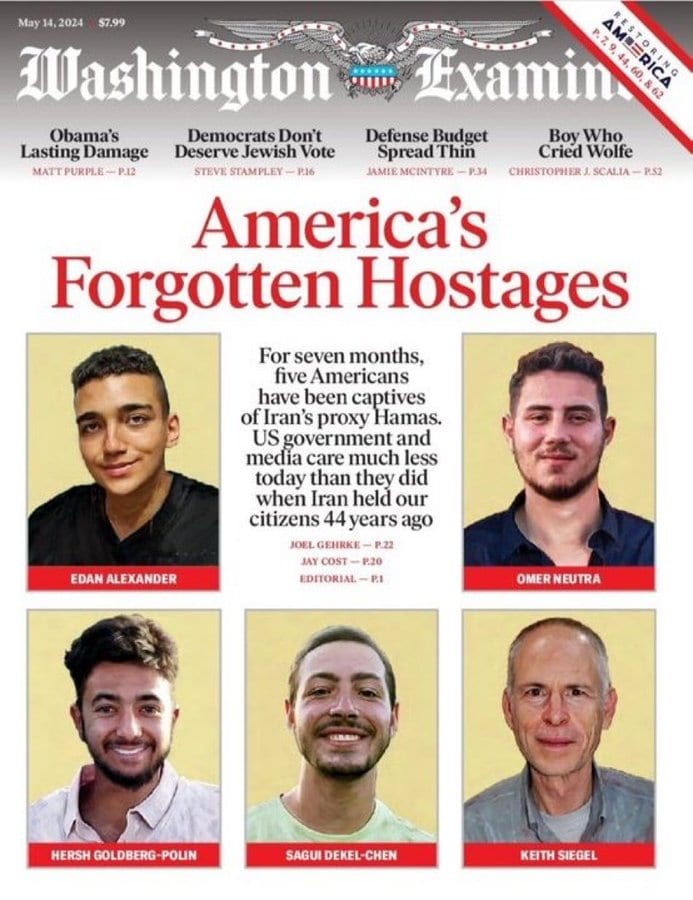
- U.S. and Israeli officials believe that some of the remaining hostages are being held by Hamas and used as human shields around the group’s leadership, which Israeli officials believe is hiding in tunnels in southern Gaza.
- Rape
- U.N. finds ‘clear and convincing’ information that hostages have been raped in Gaza
- 5 female Israeli soldiers taken hostage by Hamas seen in sick new video
- Speaking out against Hamas sex abuse, then being mocked online – The Forward
- https://www.timesofisrael.com/at-least-10-freed-hostages-were-sexually-abused-by-hamas-in-captivity-doctor-says/
🛡️ Hamas Tactics, Human Shields & Aid
See also → Hamas · Hamas Leadership · · Laws of War (IHL) · Blockade in Gaza
- Hamas Stopping Aid & Killing
- UNRWA
- Human Shields
- Hiding rockets and equipment in hospitals, schools and private homes
- Palestine > ^f30439
- Hamas firing rockets next to Al-Mawasi humanitarian zone
- Hamas HQ under largest hospital in Gaza
- Hamas spent double digit of this GDP to build 400 miles of tunnels
- Militaries seek to use ‘overwhelming force’ and not to be confused with disproportionate
- Palestinians were trapped in the country due to neighboring countries not allowing them in
- Strategy for Gaza After
- Clear, Hold, Build
- Inkblot Strategy
- Create smaller safe neighborhoods and allow something locally to pop up to counter Hamas
- Oppressed people will fight back and that’s why Oct 7th happened
- Deeply offensive to Hungarians (Soviet oppression), Tibetans, Uyghurs
- Myth #4
- Pro-Palestinian Points & Supporters > ^4dc3b7
- Genocide
- Sam Harris Arguments against Genocide
- No victims of genocide could just surrender and it would stop
- How Arabs lied and exaggerated Deir Yassin 1900-1948 > ^853f98
- 🎤 Full debate script → · Genocide
- There is no political analysis that makes sense when you see photographs of dead children
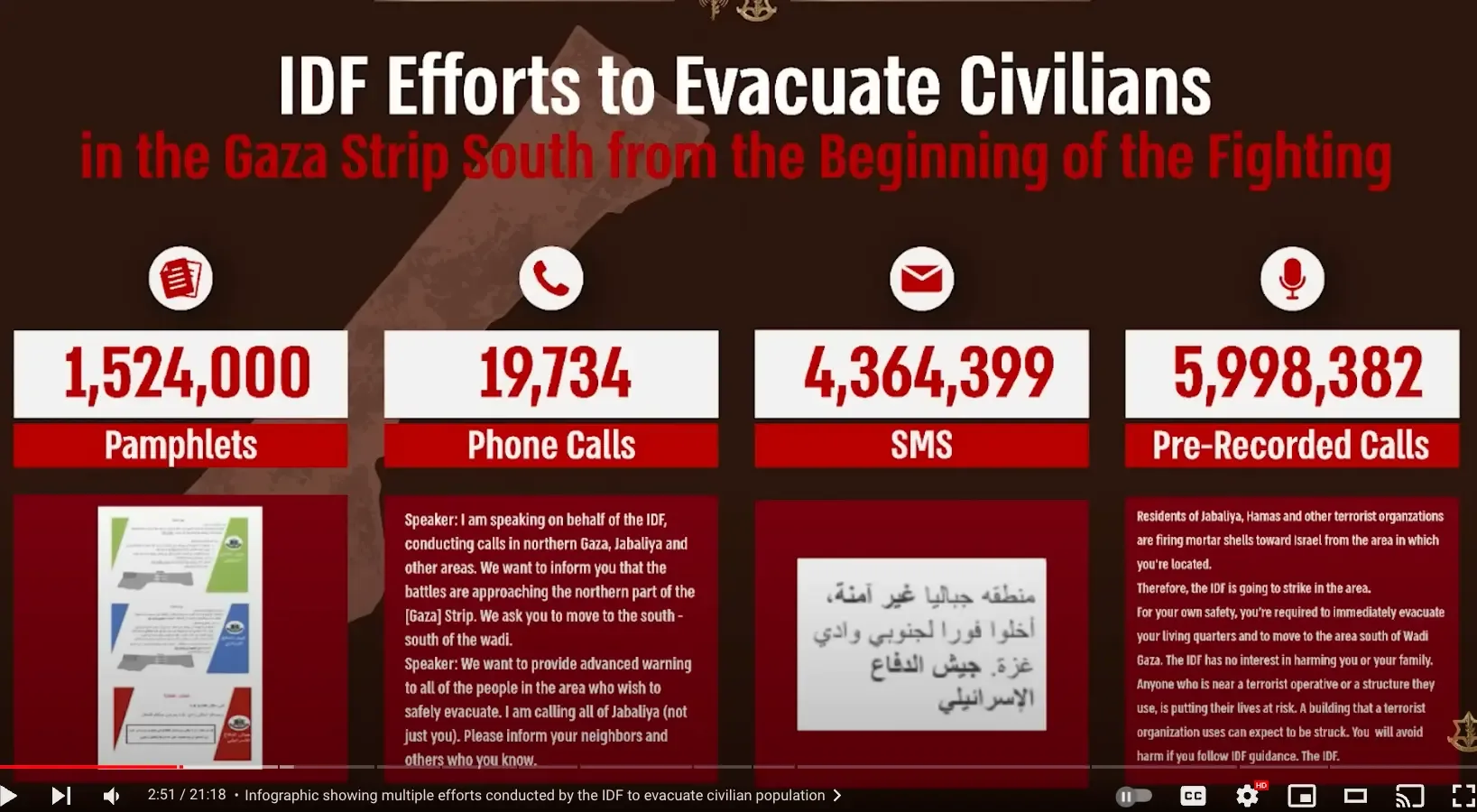
- Attempts to evacuate civilians
- Peace Deals
- Attachment (file not included in this release)
Aid theft & aid-convoy attacks
- Hamas stopping aid & Killing
- twitter.com/NoahPollak/status/1758539000770592863
- https://x.com/DrEliDavid/status/1786107071324381440
- Haviv Rettig Gur on Breaking Points > **Question 2: What is happening with aid distribution in Gaza?**
- https://www.israelhayom.com/2024/05/05/hamas-takes-responsibility-for-attack-on-gaza-crossing-point-used-to-deliver-aid/
- Israel Lifts the Veil on Gaza-Egypt Terror Tunnel Network
⚔️ IDF Tactics & Civilian Protection
- How the IDF reduces civilian casualties
- Ep. 1952 - Congress Passes MASSIVE Aid Package For Ukraine, Israel, Taiwan [Member Exclusive] | The Daily Wire
- Maj. John Spencer interview
- IDF takes more steps compared to other militaries, and restrictions on themselves
- Hamas Human Shields
- Removing civilian population from area, Evacuations
- Emptied 850,000 of 1m civilians from North Gaza and waited three weeks to allow evacuation
- Flyers
- Loud speakers
- Drones
- Phone calls
- No military has ever done this
- Handing out their own maps to civilians and enemies
- Stop military operations for four hours with routes for civilians to leave
- Telling civilians daily what area they’ll be in
- Telegraphing every move
- Do anything anybody has ever thought of to minimize civilian casualties
- Facial recognition to find Hamas hiding within civilian populations
- Ep. 1952 - Congress Passes MASSIVE Aid Package For Ukraine, Israel, Taiwan [Member Exclusive] | The Daily Wire
- Israel WANTED to go to in at the beginning with a LARGER force, but the international community said “No”
- Israel Has Created a New Standard for Urban Warfare. Why Will No One Admit It? | Opinion
- Urban Warfare Project Podcast Archives - Modern War Institute
- Al-Shifa Hospital Operation ^b2b38f
- Dumb Bombs
- Using AI
- Hospitals
- 2000 Pound Bombs
- 5,000 used in 1 month in invasion of Iraq
- Due to military complexes underneath the ground
- They are used to combat underground structures, not for damage above ground
- 5,000 used in 1 month in invasion of Iraq
Israel Protecting Civilians
IDF moves forward in Rafah as million Palestinians evacuate city - The Jerusalem Post
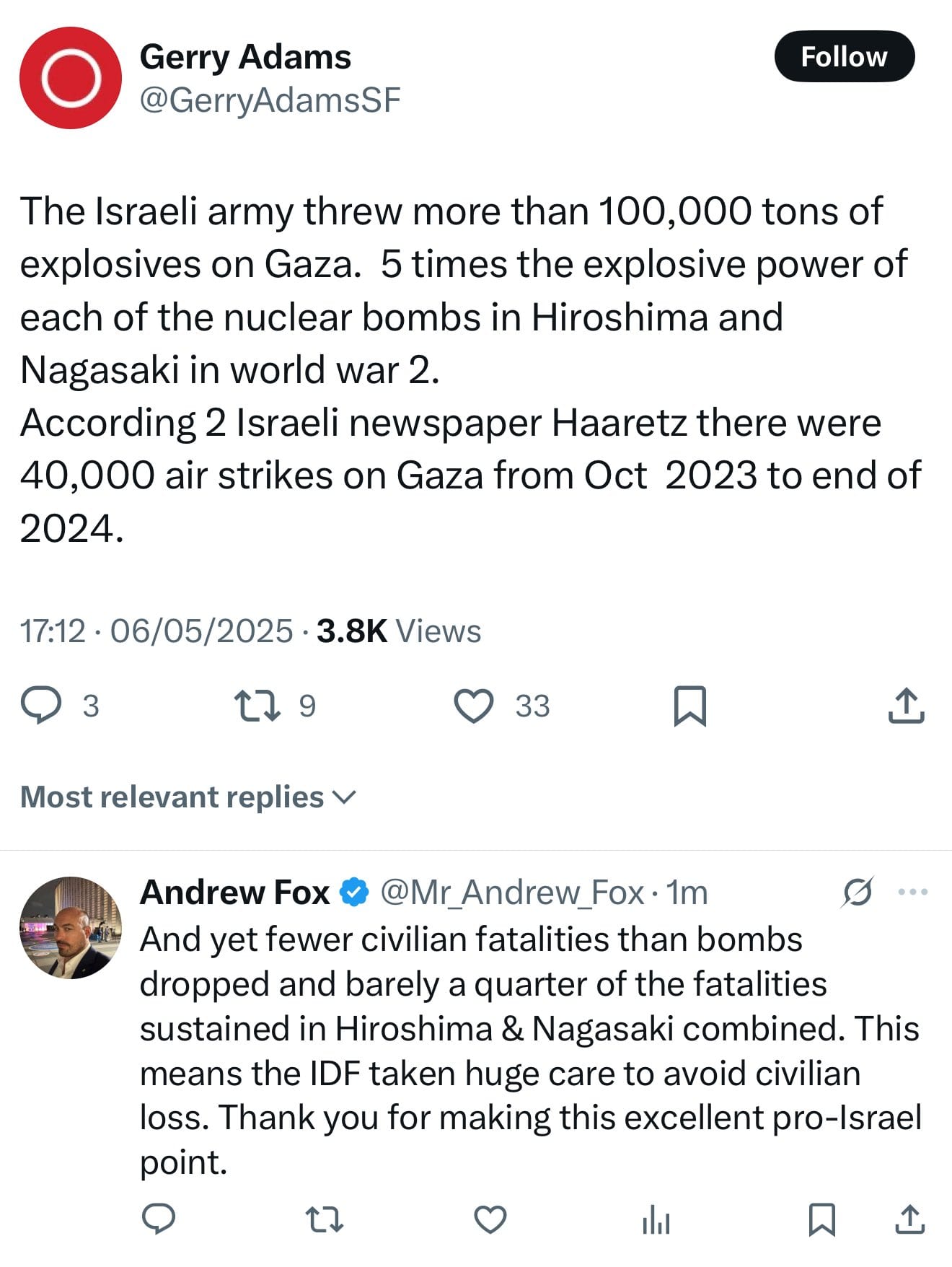
Amount of Bombs Dropped
🔢 Casualties & the Numbers Fight
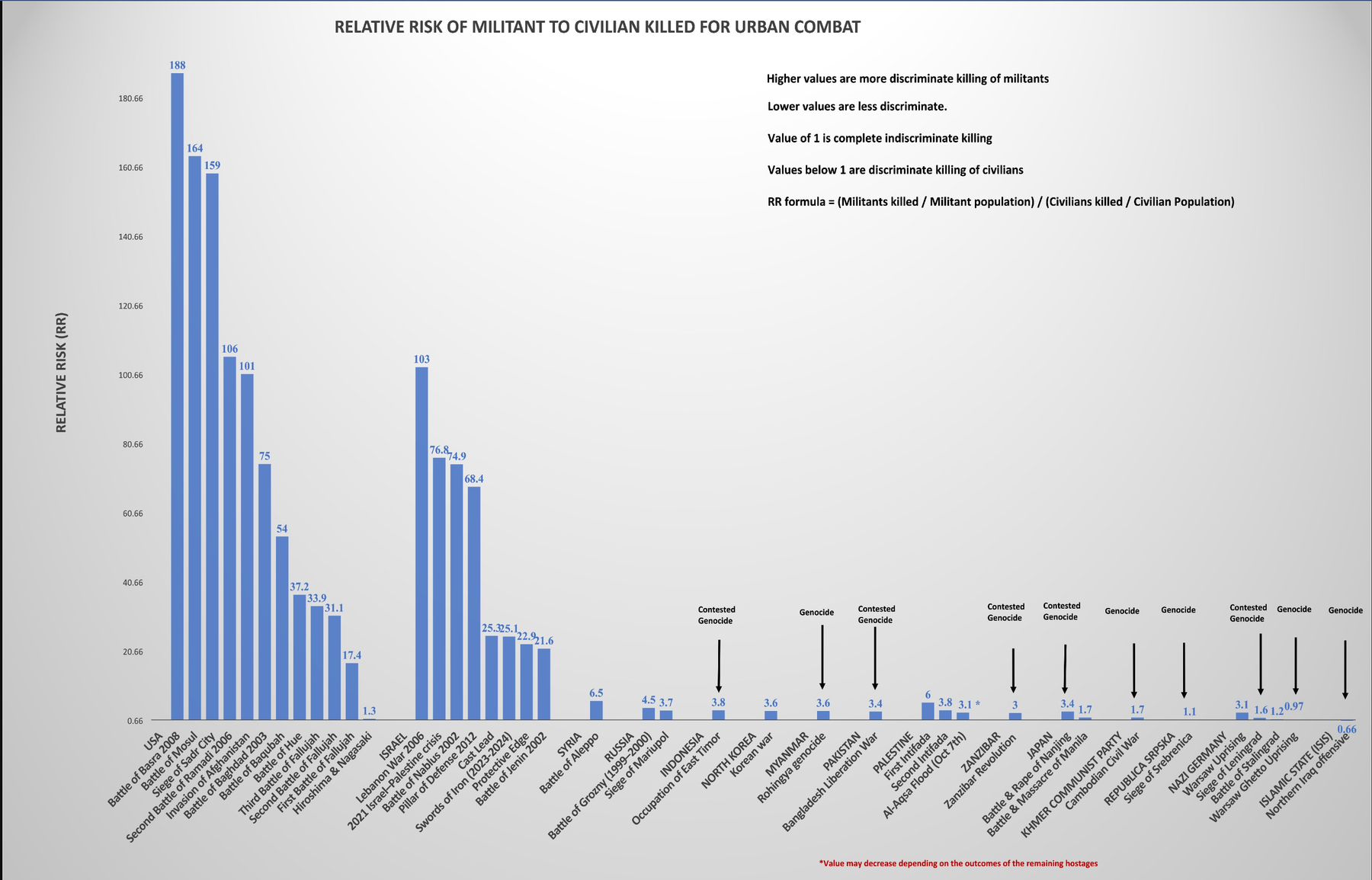
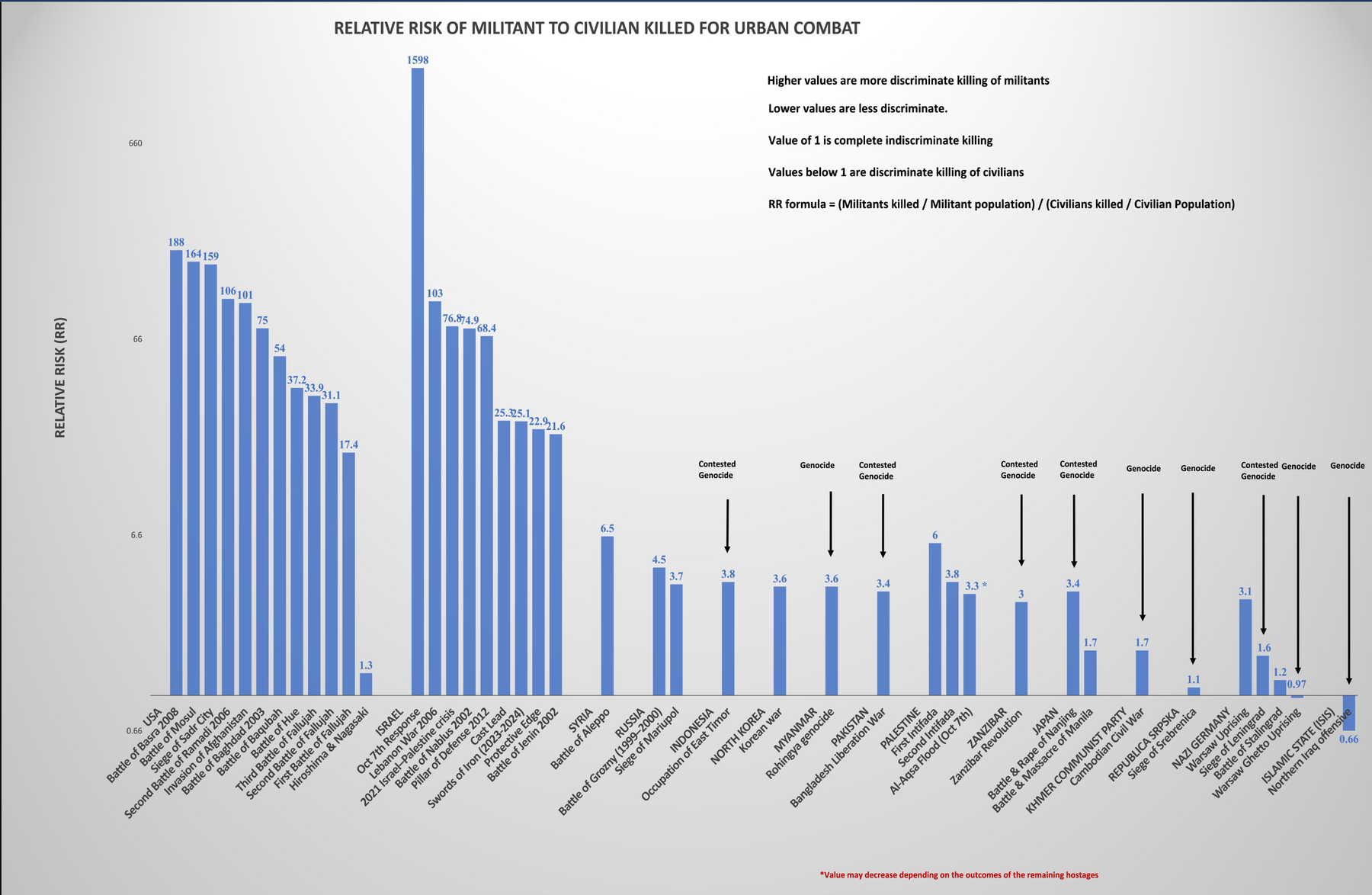
Debate-ready version → Gaza Casualty Figures (why the Hamas Health Ministry source is unreliable · the statistical anomalies · the ratio vs. historical urban warfare) · context → History of Civilian Deaths in War
- Civilian casualty ratio - Wikipedia
- twitter.com/AviBittMD/status/1751696932467097672 Discrimination Ratios
- Screenshot_2024-01-29_at_1.08.47_PM.png Screenshot_2024-01-29_at_1.09.38_PM.png
- Israel has dropped 24,000 bombs, killed less than 1 civilian per bomb. If their trying to kill civilians their literally the worst bombers in history.
- How the Gaza Ministry of Health Fakes Casualty Numbers - Tablet Magazine
- Gaza Health Ministry: 2,310 killed (70% civilians), 10,626 wounded
- UN HRC: 2,251 killed (65% civilians)
- Israel MFA: 2,125 killed (36% civilians, 44% combatants, 20% uncategorized males aged 16–50
- Gaza Fatality Data Has Become Completely Unreliable | The Washington Institute
- twitter.com/Osint613/status/1760376676733591633
- Data on casualties | United Nations Office for the Coordination of Humanitarian Affairs - occupied Palestinian territory
- Gaza (Hamas) Health Ministry Casualty Numbers
- Example: The Lie of al-Ahli Hospital bombing
- Example: Dresden
- German Gov. determined number of casualties 15 years ago.
- Killing babies
- Sources?
- Rape
- Sources? → the evidence base above
- Civilian to Combatant Ratios ^196b4f
- https://x.com/UKLFI/status/1787712624236372005
- General conflicts: 9:1
- Afghanistan: 3:1
- Iraq: 5:1
- Gaza: 1:1
- Civilian Deaths in Wartime - William Eckhardt, 1989
- https://x.com/UKLFI/status/1787712624236372005
- Daily Death Toll Chart
- On the average, half of the deaths caused by war happened to civilians, only some of whom were killed by famine associated with war…The civilian percentage share of war-related deaths remained at about 50% from century to century. (p. 97)
- The War in Gaza: No End in Sight
- Last week, the UN Office for the Coordination of Humanitarian Affairs (OCHA) finally revised the Hamas numbers substantially downward. Hamas claims that the “35,000” includes 9,500 women and 14,500 children. The OCHA is now reporting that only “4,959” identified women and “7,797” identified children have been killed (though it concedes that the actual numbers of dead may be somewhat larger than this). Moreover, Hamas has routinely classified anyone under the age of 18 as a “child”—although a substantial number of Hamas fighters are under 18 years of age—and it is likely that some of the registered deaths of women and children resulted from natural causes. For its part, the IDF claims that since 7 October it has killed 12–15,000 Hamas fighters.
Gaza Building Destruction
- Reddit - Dive into anything
- https://x.com/markzlochin/status/1767652424657862762?s=46
- According to a publication by UNITAR (the United Nations Institute for Training and Research) using data acquired by UNOSAT (The United Nations Satellite Centre), as of March 20th 2024, 35% of all buildings in Gaza have been damaged.
📺 Media & the Information War
See also → Media · Emotionally Charged Phrases · Manipulation of Wikipedia
The al-Ahli Hospital debacle
- The Lie of al-Ahli Hospital bombing
- Which brings us back to the Al-Ahli Hospital. When the explosion occurred there, news outlets worldwide reported that the cause was an Israeli airstrike against the hospital, and that 500 or more Palestinian civilians had been killed. Large pro-Hamas crowds rallied angrily in Amman, Beirut, Tehran, and elsewhere around the world. U.S. officials told Americans not to visit Lebanon and closed a diplomatic post in Turkey. Jordan’s foreign minister announced that Arab leaders would refuse to attend a summit meeting with President Biden that had been scheduled in Amman.
- Gaza’s Health Ministry holds press conference in rubble of Al-Ahli Baptist Hospital
- Israel releases ‘Hamas radio messages’ on Gaza hospital attack - YouTube
- Human Rights Watch says rocket misfire likely cause of deadly Gaza hospital blast
Coverage patterns
- Reporters are happy to report from Israel, as its safe to do so.
- Banned media outlet Al Jazeera silences Palestinians criticizing Hamas - The Jerusalem Post
🏛️ Governments, Agencies & Law
Government Responses
- The pairing of anti-semitism & Islamophobia
- America Pressure on Israel to limit Gaza casualties
International Agencies and Law
- UN
- UNRWA ^d594a7
- ICJ
🪧 Pro-Palestinian Supporters
See also → Pro-Palestinian Points & Supporters · Protesters · Radicalization
- 100,000s of Arabs killed in Yemen & Syria last few years, where were the protestors?
- Marches before Israel even responded
- The idea of extending tolerance to people who don’t extend it back needs to stop.
- Nihilism
- Goal is destruction
- Collectivism
- Dehumanizing ideology
- Poison fruit of college professor and their professors
- Separating Israel, Jews & Zionism
- Proportional Response
- It’d be immoral for Israel to do that
- War is made to be won. It’s to defeat the enemy. It isn’t pretty. Its to bring your enemy to heel. Its terrible. But if you don’t secure victory; its pointless and even sadder.
- Jews control the press conspiracy theory
- Are We Sure Jews Control the Media? | National Review
- MSNBC owned by Comcast (public)
- CBS - Viacom
- ABC - Disney
- CNN - Time Warner
- Jewish Viewers Find a Refuge in Fox News - The New York Times
- Idea that Jews is getting positive news coverage, besides FOX News, and that the Jews own the media
- → Jewish Conspiracy Theories
- People calling for cease-fire
- Attachment (file not included in this release)
- “Pacifism is objectively pro-fascist. This is elementary common sense. If you hamper the war effort of one side, you automatically help out that of the other.” -George Orwell
- Means “reload” to Hamas
- “War, in a good cause, is not the greatest evil which a nation can suffer. War is an ugly thing, but not the ugliest of things: the decayed and degraded state of moral and patriotic feeling which things nothing worth a war, is worse.” -john stuart mill
The “Netanyahu propped up Hamas” line
Attachment (file not included in this release)
Commentary: This Is Bibi Netanyahu’s War
A Brief History of the Netanyahu-Hamas Alliance - Israel News - Haaretz.com
People criticize Israel for an apartheid state, open air prison for Gaza and when Israel does allow money or stuff through, they say he’s support Hamas?
For years, Netanyahu propped up Hamas. Now it’s blown up in our faces | The Times of Israel
Netanyahu: Money to Hamas part of strategy to keep Palestinians divided - The Jerusalem Post
✡️ Pro-Israel
See also → Pro-Israel Points & Supporters · Quotes (Israel-Palestine)
The massacre of the Peace Rave on Oct. 7 is a metaphor of our times.
Attachment (file not included in this release)
- The Sin of Moral Equivalence (Episode #338) - Sam Harris
- Israel at War (with guest Haviv Rettig Gur) - Danger Close with Jack Carr
Attachment (file not included in this release)
Attachment (file not included in this release)
Attachment (file not included in this release) Sam Harris X Eric Weinstein: Israel-Palestine - Triggernometry
Attachment (file not included in this release) Israel/Palestine: The History and What’s Real? Opposing Views with Norman Finkelstein and David Brog - Mikhaila Peterson + NOTES
Attachment (file not included in this release)
— John Spencer’s rebuttal thread
🎥 Footage & Primary Evidence
- West Bank medic takes weapon from downed militant, passes it to another militant to continue shooting at IDF. Today. Jenin. : r/CombatFootage
- Hamas Is Isis
- x.com
- Oct 7th Video
- Hamas Massacre | October 7th Proof
🌍 Iran & the Regional War
Full hub → Iran & the Axis of Resistance
- Tehran launched 170 explosive-laden drones, around 120 ballistic missiles and around roughly 30 cruise missiles
- The design of Iran’s strike replicated in many ways some of the biggest Russian attacks in Ukraine: first a swarm of slow-moving Shahed drones intended to overwhelm air defenses and to identify the locations of air-defense batteries, then cruise missiles and then a volley of faster ballistic missiles that are notoriously hard to intercept.
- Saudis say Iran instigated Gaza war to sabotage Israel normalization - JNS.org
📚 Research, Sources & Deeper Notes
Sourced reconstructions
- Destiny Notes October 7th Hamas Attack — the attack: belligerents, sources, sequence
- Destiny Notes - Oct 7th Invasion — companion note on the invasion
- Oct 7th War - Destiny Notes — the war that followed (2023.10.07–ongoing)
Books & papers
- On Democracies and Death Cults — Douglas Murray; the scale, the boasting, the global inversion
- Son of Hamas · Hamas in Its Own Words — the movement in its own voice
- Attachment (file not included in this release)
- Attachment (file not included in this release)
🔗 Across the Vault
- Timeline: 1968-2023 ← here → Timeline & History (MOC)
- Places & actors: Gaza · Israel · Hamas · Hamas Leadership · Sinwar · Iran & the Axis of Resistance · People, Groups & Places (MOC)
- The accusations: Genocide · Ethnic Cleansing · Apartheid · Blockade in Gaza · Massacres & War Crimes · Key Arguments (MOC)
- Primary reports: Attachment (file not included in this release) · Attachment (file not included in this release) · Attachment (file not included in this release)
- Evidence & data: Gaza Casualty Figures · History of Civilian Deaths in War · Polls · ·
- Women in combat: Caracal's Pereh company → Feminism · Force Doctrine · Force Doctrine and Patriarchy
- Aftermath: Attacks of Jews since October 7th 2023 · Antisemitism · Protesters · Radicalization
- Media & rhetoric: Media · Emotionally Charged Phrases · Sources, Books & Media (MOC)
📥 Notes linking here that this note doesn’t link back to
Attachment (file not included in this release)